Ganesh Chaturthi Recipes: Easy Vegetarian Indian Dishes
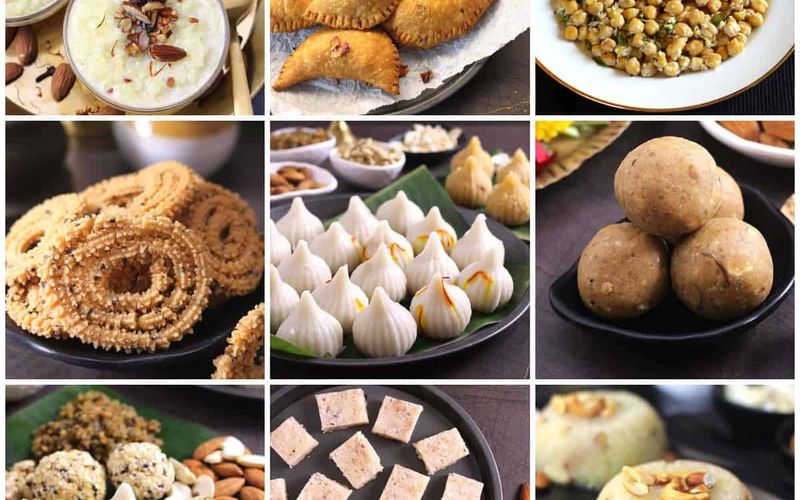
These Ganesh Chaturthi recipes cover ukadiche modak, mawa modak, besan ladoo, coconut ladoo, and karanji — everything for the 10-day festival prasad.
Prep time
30 minutes
Cook time
12 minutes (steaming)
Cuisine
Indian (Maharashtrian)
Ingredients
Nutrition
Ganesh Chaturthi is a 10-day festival celebrating Lord Ganesha, and the food prepared during this period sits at the heart of the observance. The prasad offered to the deity centers almost entirely on modak — Ganesha's favourite sweet — alongside a range of ladoos and fried sweets distributed to family and guests across the festival's duration. These Ganesh Chaturthi recipes cover every major category: steamed modak, mawa modak, chocolate modak, besan ladoo, coconut ladoo, boondi ladoo, and Maharashtrian karanji. For Ganesh Chaturthi recipes 2026, the festival falls in late August and early September, the peak of the monsoon season — a time when fresh coconut and jaggery are in peak supply, which is part of why the traditional recipes are built around them. For another festival's prasad and bhog tradition, the Janmashtami recipes guidecovers the full range of fasting and offering foods across a comparable 10-day observance.
Why Modak Is the Centre of Every Ganesh Chaturthi Prasad
Virtually every devotional text and temple tradition associated with Lord Ganesha identifies modak as his most preferred food offering — the name itself translates broadly to "that which brings happiness." The full range of Ganesh Chaturthi prasad built around it falls into three broad categories: steamed (the traditional ukadiche version), fried (the festive, longer-lasting version), and modern variations like mawa and chocolate modak that have become standard in home kitchens over the last two decades. The Ganpati bhogassembled for the main puja typically leads with 21 ukadiche modak, supplemented by whatever additional sweets the household prepares. Understanding this priority order helps with planning — the steamed version requires the most care and is made fresh, while the others can be prepared days ahead.
Ukadiche Modak Recipe — The Traditional Steamed Version
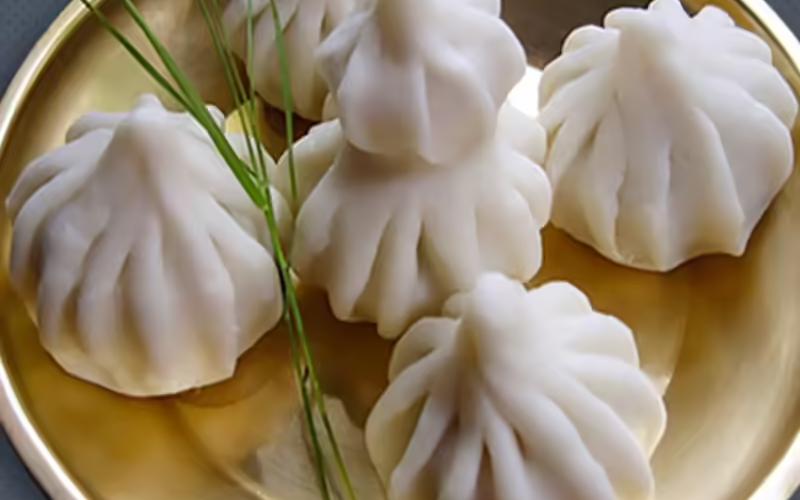
The ukadiche modak recipe is the benchmark of Maharashtrian festival cooking — a rice flour outer shell filled with sweetened coconut and jaggery, pleated into a distinctive shape and steamed until translucent. This is the version that appears at temple pujas and defines what Ganpati recipesmean to most Maharashtrian families. A standard batch of 21 modak uses 2 cups (280g) of rice flour, 2 cups (about 180g) of grated fresh coconut, 1 cup (about 200g) of grated jaggery, ½ teaspoon cardamom powder, and a pinch of nutmeg for the filling.
The Rice Flour Dough
Bring 2 cups (480ml) of water to a full boil with a pinch of salt and 1 teaspoon of oil. Remove from heat and add the rice flour all at once, stirring immediately with a wooden spoon until the mixture comes together into a smooth, non-sticky dough. The water temperature is critical — using water that isn't fully boiling produces a dough that cracks during shaping rather than stretching cleanly. Cover with a damp cloth and rest for 5 minutes before shaping.
Shaping the Pleats (Paat)
Take a small ball of dough (about 30–35g), flatten into a thin circle using oiled fingers, place a spoonful of filling in the center, and bring the edges up to create pleats — the traditional count is 14, working around the circumference. Pinch the pleats together at the top to form the characteristic peak. A silicone or metal modak mould significantly speeds this up for anyone finding the hand-pleat technique difficult on a first attempt — press dough into each half of the mould, add filling, press the halves together, and unmould.
Steaming Time
Arrange the shaped modak in a greased steamer basket, leaving space between each one, and steam for 10–12 minutes over medium-high heat. They're ready when the outer shell turns slightly translucent and loses its raw-flour appearance. Finish each modak with a small drizzle of ghee before serving — this is the standard prasad presentation and adds the richness the filling's jaggery and coconut expect.
Mawa Modak Recipe — The Richer, Easier Alternative
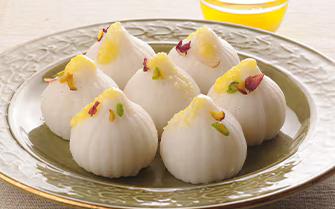
The mawa modak recipe removes every shaping and steaming challenge from the equation. Crumble 250g of khoya (mawa) into a heavy-bottomed pan over low heat, stir constantly until it melts and begins to leave the sides of the pan — about 5–7 minutes. Add 3–4 tablespoons of powdered sugar and ½ teaspoon cardamom powder, stir for another 2 minutes until combined, then remove from heat. The finished mixture should be soft and pliable, not crumbly or wet.
Getting the Mawa Consistency Right
If the mixture seems too soft to hold shape, cook for 1–2 additional minutes. If it starts to dry out and crumble, add a tablespoon of warm milk and stir through. The goal is a consistency that holds together firmly when pressed between two fingers but still feels slightly yielding — closer to soft modelling clay than a rigid dough.
Mould vs. Hand-Shaped
A silicone modak mould produces cleaner, more uniform shapes for mawa modak than hand-shaping, since the mixture is denser than rice flour dough and doesn't stretch the same way. Press the mawa mixture into a lightly greased mould, close firmly, and unmould immediately. For a hand-shaped version, roll into a ball and pinch a peak at the top — simple and faster, though less visually precise.
Chocolate Modak Recipe — The Modern Prasad Option
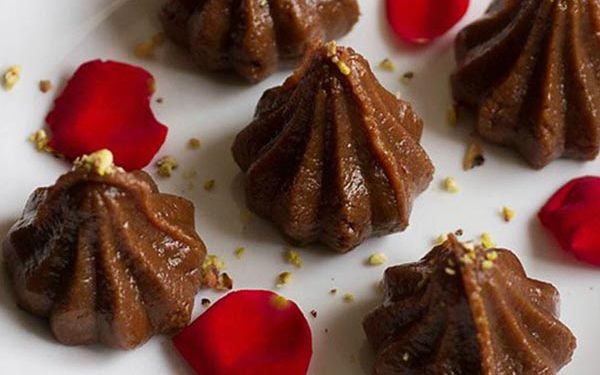
The chocolate modak recipe takes the same mould-based approach but replaces mawa with chocolate — melt 200g of good-quality dark or milk chocolate in a heatproof bowl over simmering water (or microwave in 30-second intervals), stir until smooth, and pour into greased modak moulds. For a filled version, pour a thin layer of chocolate into the mould, refrigerate for 5 minutes to set the shell, add a spoonful of coconut filling or ganache to the center, then pour more chocolate over the top and refrigerate until fully set. Among the Ganesh Chaturthi sweets that have become mainstream in urban households over the last decade, chocolate modak is the one that works best for children and anyone who finds traditional Indian sweets too rich or too sweet.
Besan Ladoo, Coconut Ladoo, and Boondi Ladoo — The Essential Supporting Sweets
These three ladoo varieties appear alongside modak as the standard supporting Ganesh Chaturthi prasad across most Indian households, and all three can be distributed in larger quantities than modak since they're faster to make in bulk.
Besan Ladoo Recipe
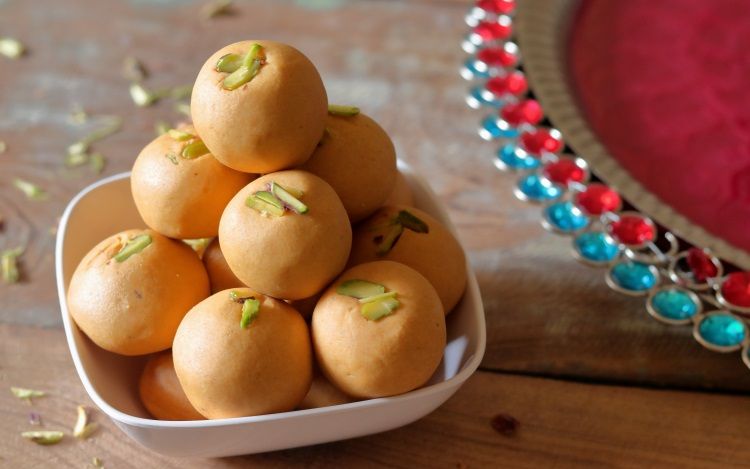
A besan ladoo recipe for 20–25 ladoos uses 2 cups (200g) of fine chickpea flour (besan), ½ cup (110g) of ghee, 1 cup (120g) of powdered sugar, ½ teaspoon cardamom powder, and 2 tablespoons of chopped cashews or raisins (optional). Heat the ghee in a heavy pan over low heat, add the besan, and roast continuously for 15–20 minutes, stirring without stopping, until the flour deepens to a golden color and produces a distinct nutty, roasted aroma. Remove from heat, cool until warm but not hot, then mix in the powdered sugar and cardamom. Roll into balls while the mixture is still slightly warm — once fully cooled, it becomes difficult to shape.
Coconut Ladoo Recipe
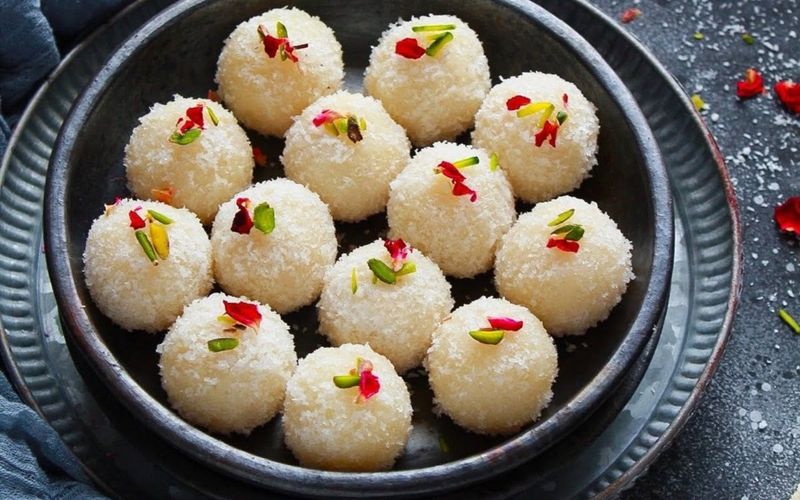
A coconut ladoo recipe for a large batch: combine 2 cups (160g) of desiccated coconut with 1 can (400g) of condensed milk and ½ teaspoon cardamom powder in a non-stick pan over medium heat. Stir continuously for 5–7 minutes until the mixture pulls away from the sides and comes together into a pliable mass. Cool slightly, roll into balls, and optionally roll in extra desiccated coconut. This is the fastest and most beginner-friendly coconut ladoo on the list — a large batch takes under 20 minutes from start to finish.
Boondi Ladoo Recipe
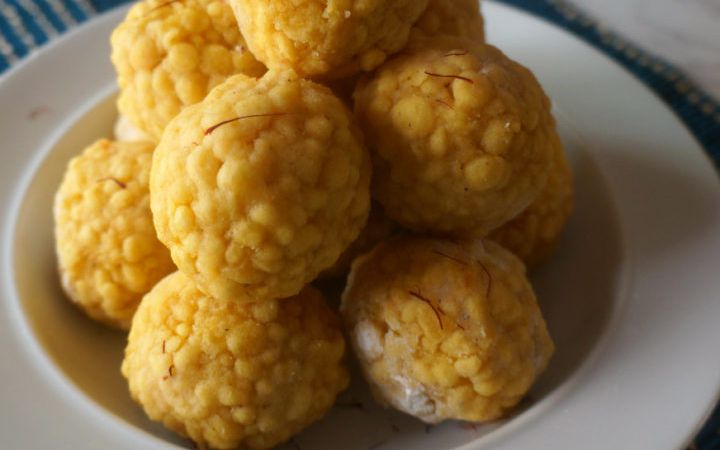
The boondi ladoo recipe is the most technically involved: prepare a thin, pourable batter from 1 cup (100g) of besan and water (roughly 1:1 ratio), heat oil in a deep pan, and pour the batter through a perforated ladle (boondi ladle) held above the oil surface to create small, round droplets — boondi — that fry until just set but not fully crisp, about 30–45 seconds per batch. Prepare a sugar syrup of 1 cup sugar and ½ cup water cooked to one-string consistency, soak the boondi in the warm syrup for 2–3 minutes, then press into balls while still warm. Speed matters here — cooled boondi doesn't compress cleanly.
Karanji — The Fried Crescent Sweet
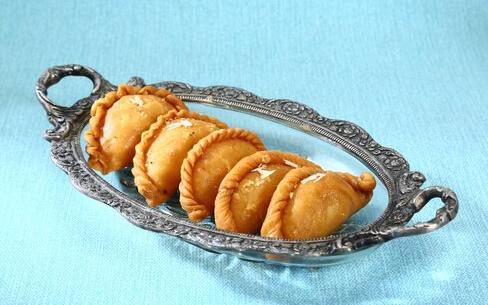
The karanji recipe (gujiya in North India) produces a deep-fried, crescent-shaped pastry that keeps better than almost any other Ganesh Chaturthi sweet. The shell uses 2 cups (250g) of plain flour, 3 tablespoons of ghee rubbed in until the mixture resembles fine breadcrumbs, then enough cold water added gradually to bring the dough together — firm, not soft. A ghee-heavy shell is what produces the characteristic flaky bite after frying.
The Pastry Shell
Rest the dough covered for 20–30 minutes before rolling. Roll thin — about 2–3mm — and cut into circles approximately 10–12cm (4–5 inches) across. The filling is dry: 1 cup grated dry coconut roasted briefly, mixed with 3 tablespoons khoya, 3 tablespoons powdered sugar, and 1 tablespoon each of chopped almonds and raisins.
Filling and Sealing
Place a spoonful of filling on one half of each circle, brush the edge with water, fold over, and press the edge firmly shut. Crimp the sealed edge using a fork or traditional crimping tool to ensure it doesn't open in hot oil. Fry in ghee or oil at medium heat — too high and the shell browns before the pastry cooks through; too low and the karanji absorbs excess oil. Drain on paper and cool completely before storing — Maharashtrian karanji stays crisp in an airtight container for 4–5 days at room temperature.
Ganesh Chaturthi Modak Styles at a Glance
For easy Ganesh Chaturthi recipes planning, the modak style choice usually comes down to time available, experience with shaping, and whether the modak is being made as a puja offering or for wider distribution.
| Modak Style | Main Ingredient | Cooking Method | Skill Level | Best For |
|---|---|---|---|---|
| Ukadiche (Steamed) | Rice flour + coconut-jaggery | Steamed | Intermediate | Traditional puja offering |
| Mawa Modak | Khoya + sugar | No cook (mould) | Easy | Quick prasad, gifting |
| Chocolate Modak | Dark/milk chocolate | Melted + moulded | Easy | Children, modern households |
| Fried Modak | Maida + coconut filling | Deep fried | Intermediate | Festive variety, longer shelf life |
Tips for Making Ganesh Chaturthi Sweets at Home
Make the besan ladoo and karanji 2–3 days before the main puja — both improve slightly in flavor after a day of resting and keep well at room temperature. Make ukadiche modak fresh on the puja morning, since steamed rice flour modak harden noticeably within 3–4 hours of steaming and are best eaten the day they're made. Use fresh, moist jaggery for the coconut filling in ukadiche modak — old, dry jaggery doesn't melt evenly into the coconut during cooking and produces a grainy filling texture. A silicone modak mould is worth buying for anyone making mawa or chocolate modak in volume — it produces consistent shapes in a fraction of the hand-shaping time.
FAQ
What is the traditional sweet for Ganesh Chaturthi?
Ukadiche modak — a steamed rice flour dumpling filled with sweetened coconut and jaggery — is the most traditional and sacred sweet for Ganesh Chaturthi. Devotional texts describe it as Lord Ganesha's favourite offering, which is why it appears as the primary prasad at virtually every Ganesh Chaturthi puja across Maharashtra and beyond.
How many modak are offered to Ganesha?
The traditional number for a puja offering is 21 modak, which holds specific significance in devotional tradition. Some households offer 11, 5, or any odd number depending on family practice and available time. The number matters primarily for the main puja offering — prasad distributed to guests doesn't follow the same count.
Can modak be made without a mould?
Yes — ukadiche modak is traditionally shaped by hand using oiled fingers to create pleats around the filling, and the technique can be learned with practice. Mawa and chocolate modak are easier to shape without a mould than rice flour versions, since the filling is denser and holds form without the same structural precision required.
How long do Ganesh Chaturthi sweets last?
Besan ladoo and karanji last 4–5 days at room temperature in an airtight container. Coconut ladoo keeps for 2–3 days. Mawa modak keeps for 2 days at room temperature or 4–5 days refrigerated. Ukadiche modak should be eaten the day they're made, since they harden significantly within a few hours of steaming.
What is the difference between modak and karanji?
Modak is a dumpling shape — steamed or fried — with a sweet filling, most commonly coconut and jaggery. Karanji (called gujiya in North India) is a crescent-shaped deep-fried pastry with a similar coconut or khoya filling. Both appear at Ganesh Chaturthi but karanji is a separate preparation from modak rather than a variation of it.
The practical preparation sequence for traditional Ganesh Chaturthi recipes 2026: karanji and besan ladoo two days before the puja, coconut ladoo and mawa modak the evening before, and ukadiche modak fresh on the puja morning. Chocolate modak can go into the fridge any time before the festival. Spreading the kitchen work across three days rather than attempting everything the night before makes the ukadiche modak — the one that genuinely requires calm, unhurried attention — achievable on the day without shortcuts. Browse more vegetarian recipes for the full festival spread, or start the festival morning with the high protein Indian breakfast guide before the sweet preparations begin.
Tags