Karanji Recipe: How to Get the Shell Crispy and the Filling Dry Enough
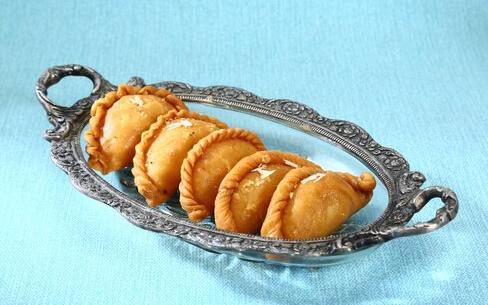
This karanji recipe covers the flaky pastry shell, the dry coconut-jaggery filling, and the sealing technique that stops them from bursting in hot oil.
Prep time
30 minutes (+ 20–30 minutes dough resting)
Cook time
45 minutes (frying in batches)
Cuisine
Indian (Maharashtrian)
Ingredients
Nutrition
The karanji recipe is the most time-intensive sweet in the Ganesh Chaturthi repertoire and also the one that keeps longest, impresses most, and benefits most from being made 2–3 days ahead rather than the morning of the puja. It's a deep-fried crescent pastry filled with sweetened dry coconut and optionally khoya, sealed with a crimped edge, and fried slowly at a lower temperature than most deep-fried preparations. Two failure modes account for almost every bad batch: a filling with too much moisture that generates steam in the oil and bursts through the seal, and a shell dough that was rolled and filled without adequate resting time and comes out dense rather than flaky. This guide is built around both. For the complete festival sweet planning list, see the Ganesh Chaturthi recipes guide.
Karanji vs. Gujiya — Same Sweet, Different Names
For global readers who may recognize one name but not the other: karanji is the Maharashtrian name for this festive sweet; gujiya is the North Indian name, most associated with Holi celebrations in Rajasthan and Uttar Pradesh. The pastry shell method is essentially identical between both regional versions — plain flour dough with ghee rubbed in, rolled thin, filled, sealed, and deep-fried. What differs is the filling: a Maharashtrian karanji recipe typically uses dry coconut (sometimes roasted, sometimes plain), jaggery or powdered sugar, and cardamom, with khoya as an optional addition. North Indian gujiya relies more heavily on khoya and sugar with coconut playing a smaller role. Understanding this distinction helps anyone who has eaten gujiya at a relative's home and found the traditional karanji recipe version different — the shell is the same; the filling's ratio of coconut to khoya is what changes.
The Pastry Shell — Where Crispiness Comes From
The shell dough for a crispy karanji recipe uses 2 cups (250g) of plain flour (maida), 3–4 tablespoons (45–55g) of ghee, a pinch of salt, and approximately ½ cup (120ml) of water added gradually to bring the dough together. The ghee-to-flour ratio is what determines the outcome: too little ghee and the shell bakes hard rather than frying into layers; too much and the dough doesn't hold its shape well enough to crimp cleanly.
The Moyan (Fat-Rubbing) Technique
Before any water is added, rub the ghee into the flour with the fingertips until the mixture looks like coarse, slightly clumped breadcrumbs — this is the moyan step. Every grain of flour should be lightly coated with fat before water touches the mixture. The moyan creates a layered structure in the dough that produces flakiness during frying — the fat between layers prevents them from fusing completely, so heat causes them to separate into distinct, crisp sheets rather than a solid mass. Rushing or skipping the moyan is the most common reason a karanji shell comes out dense and hard rather than flaky.
Resting the Dough
Once the dough is brought together with water, cover it with a damp cloth and rest for a minimum of 20–30 minutes. The rest period allows the gluten that formed during kneading to relax, making the dough roll out thin and smooth without springing back. Dough that hasn't rested enough fights the rolling pin — it contracts back toward its original thickness and is difficult to roll to the correct 2–3mm without tearing.
The Karanji Filling — Dry Is Everything
The filling is where most karanji recipe with coconut batches fail, and the reason is always the same: moisture. Any liquid in the filling — from fresh coconut, from moist jaggery, from wet khoya — turns to steam inside the sealed pastry during frying, builds pressure, and forces through the crimped seam regardless of how tightly it was sealed. The rule is absolute: every ingredient in the filling must be thoroughly dry before assembly begins.
Dry Coconut vs. Fresh Coconut
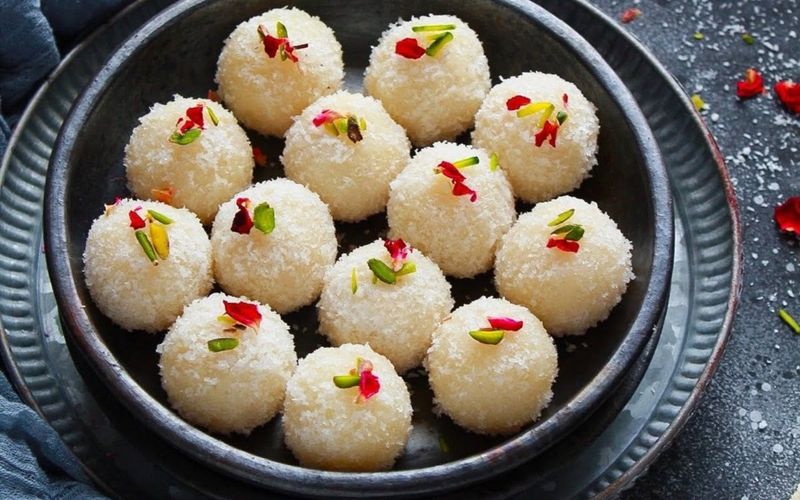
Only dry (desiccated) coconut or roasted dry coconut belongs in this filling. According to USDA FoodData Central, fresh coconut contains approximately 47% moisture by weight, while desiccated coconut contains only about 3% — the difference is exactly what separates a filling that stays sealed through 10 minutes of frying from one that bursts open within the first two minutes. The coconut ladoo recipe uses the same dry coconut base as this filling — making both on the same day is an efficient use of the opened coconut packet.
Jaggery vs. Powdered Sugar
Jaggery adds a more complex, slightly molasses-like sweetness to the Ganesh Chaturthi sweets filling than powdered sugar, but moist jaggery is a seal risk — it releases moisture when heated. Dry, well-stored jaggery grated fine is workable; soft, fresh jaggery should be replaced with powdered sugar for safety. For a easy karanji recipe first attempt, powdered sugar is the recommended choice — it produces no moisture risk and a cleaner, longer-keeping filling.
Adding Khoya and Dry Fruits
The richer version of the filling folds in 3–4 tablespoons of khoya (mawa), ½ cup of chopped cashews and almonds, 2 tablespoons of raisins, and a teaspoon of cardamom powder alongside the dry coconut and sugar. Khoya adds richness and density but introduces a moisture variable — check it the same way as the mawa modak preparation (press between two fingers; it should feel dry-ish rather than wet or oily). The mawa modak recipe covers the khoya moisture-testing technique relevant to this filling decision.
Easy Karanji Recipe — Full Method Step by Step
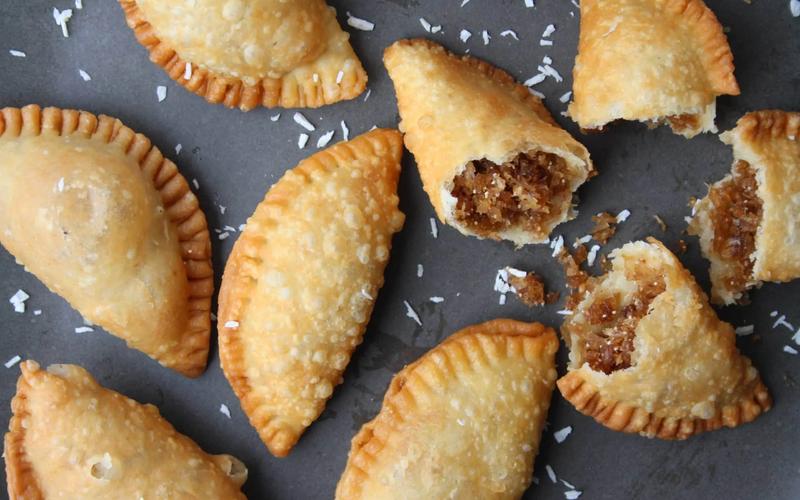
A batch of 20–24 karanji uses: the full dough batch above, and a filling made from 1½ cups (120g) dry desiccated coconut, ¾ cup (90g) powdered sugar, ½ teaspoon cardamom powder, 3 tablespoons khoya (optional), and 2 tablespoons each of chopped cashews and raisins.
Rolling the Pastry Circles
Divide the rested dough into 20–24 equal balls. Roll each ball into a circle of approximately 10–12cm (4–5 inches) in diameter, 2–3mm thick. Thinner than 2mm and the shell tears during crimping and folding; thicker than 3mm and it doesn't fry through to a crisp center before the outside has browned. Keep unrolled dough balls covered with a damp cloth while working through the batch — exposed dough dries quickly and cracks at the edges when rolled.
Filling and Sealing Without Leaks
Place 1 to 1.5 teaspoons of filling in the center of each circle — this is the correct quantity for a karanji of this size. Overfilling is the primary cause of burst seams: a karanji that looks well-filled at room temperature has very little room for any expansion from heat. Brush a thin line of water around the entire edge using a finger or pastry brush, fold the circle in half over the filling to create the crescent shape, and press the edge firmly shut.
Crimping the Edge
Press the sealed edge a second time after the initial press — a single crimp is often not sufficient to hold through 10 minutes of frying in hot oil. Crimp using a fork (pressing the tines across the edge), a traditional finger-twist method (pinching and folding alternating sections of the edge), or a crimping wheel. After crimping, press the entire seam once more with clean, dry fingertips. Before any karanji goes into the oil, press gently on the seam with one finger — if the seam opens under light pressure, it will burst in the oil without question.
Homemade Karanji Recipe — Frying Correctly
For a homemade karanji recipe, heat oil in a wide, deep pan to approximately 150–160°C (300–320°F) — considerably lower than most deep-frying temperatures. Karanji is fried slow and long rather than fast and hot.
Oil Temperature and Why Slow-Frying Matters
At 150–160°C, the pastry shell has enough time to cook through completely and develop its layered, flaky structure before the outside reaches its final golden color. At higher temperatures — above 175°C (350°F) — the outside browns within 3–4 minutes while the interior is still dense and undercooked, producing a shell that looks done but isn't. A lower temperature allows 8–12 minutes of frying time per batch, and that extended contact with the oil is exactly what produces the characteristic deep, even gold color of a well-made homemade karanji recipe.
The Visual Doneness Test
A finished karanji looks deeply golden — not pale gold, but a rich amber brown across the entire surface. It feels noticeably light when lifted with a slotted spoon compared to when it went in, because most of the moisture inside has left as steam. Tap the shell gently against the edge of the pan — a hollow sound indicates a fully crisped shell; a dull thud means the interior is still dense and needs another 2–3 minutes.
Traditional Karanji Recipe — Regional and Filling Variations
The traditional karanji recipe varies across Maharashtra's regions. The Konkan-style version uses briefly cooked fresh coconut with jaggery (cooled completely and very dry before filling) rather than desiccated coconut, producing a more aromatic filling with a shorter shelf life. The Diwali version common in Pune and Nashik often adds 2 tablespoons of fine roasted semolina (rava) to the filling for extra texture. Temple-offering versions lean more heavily on khoya and dry fruits with minimal coconut. All versions share the same pastry shell; the regional identity lives entirely in the filling's composition.
Karanji Filling Variations at a Glance
The filling choice is the main fork in the road for any karanji recipe for Ganesh Chaturthi — the shell method is consistent across all variations.
| Filling Variation | Main Ingredients | Moisture Risk | Shelf Life | Best For |
|---|---|---|---|---|
| Classic dry coconut + jaggery | Dry coconut, jaggery | Low (if jaggery is dry) | 5–7 days | Traditional prasad |
| Dry coconut + powdered sugar | Dry coconut, sugar | Very low | 7–10 days | Beginners, longer keeping |
| Khoya + dry coconut + dry fruits | Khoya, dry coconut, nuts | Medium (check khoya moisture) | 4–5 days | Rich, festive gifting |
| Semolina + coconut | Roasted rava, coconut, sugar | Low | 5–7 days | Textured, Diwali style |
Tips for the Best Crispy Karanji That Doesn't Burst
Always press the crimped edge a second time after the initial crimp — this is the single most reliable insurance against burst seams and takes under 5 seconds per karanji. Check each one before it goes into the oil by pressing gently on the seam; if it opens under light finger pressure, reseal and recrimp before frying. Use only dry filling ingredients without exception — no fresh coconut, no soft jaggery, no wet khoya. Fry on the lowest medium heat available and don't raise the temperature even if early batches seem slow — the slow fry is the method, not an inefficiency to overcome.
Storage, Shelf Life, and Gifting
The dry coconut and powdered sugar version keeps at room temperature in an airtight container for 7–10 days — making this the most practically advance-preparable sweet in the entire Ganesh Chaturthi lineup. The classic dry coconut and dry jaggery version keeps for 5–7 days; the khoya-enriched version keeps for 4–5 days due to the dairy component. For gifting, a dry paper-lined box prevents the finished karanji from sitting in residual surface oil and keeps the shell crisp longer than plastic wrap does. Browse more vegetarian recipes for the full festival spread for additional sweet options alongside the karanji on a full prasad table.
FAQ
What is karanji made of?
Karanji is a deep-fried crescent pastry made from a plain flour shell filled with sweetened dry coconut and optionally khoya, cardamom, and dry fruits. The shell dough uses ghee for flakiness, and the edge is crimped tightly before frying to prevent the filling from leaking into the hot oil during cooking.
What is the difference between karanji and gujiya?
Karanji is the Maharashtrian name; gujiya is the North Indian name — both are deep-fried crescent pastries with sweet fillings. Maharashtrian karanji typically uses a dry coconut-based filling, while North Indian gujiya relies more heavily on khoya and sugar. The pastry shell method is essentially identical between the two regional versions.
Why does my karanji burst while frying?
Burst karanji almost always traces to one of two causes: the seal wasn't crimped firmly enough and opened under the pressure of steam generated from the filling, or the filling contained too much moisture (from fresh coconut, moist jaggery, or wet khoya) that turned to steam and forced the seam apart.
Can karanji be made ahead of time?
Yes — karanji is one of the best festival sweets for advance preparation. The dry coconut and powdered sugar version keeps for 7–10 days at room temperature in an airtight container, making it practical to prepare 3–5 days before the main festival puja without any loss in quality.
Can karanji be baked instead of fried?
Yes — brush the filled and sealed karanji with a light layer of milk or melted ghee and bake at 180°C (350°F) for 20–25 minutes, turning once halfway through. The baked version is lighter in oil content but doesn't achieve the same deep-golden, flaky shell that frying produces.
This karanji recipe is the most time-consuming sweet in the Ganesh Chaturthi lineup and also the most rewarding to make ahead — the shell crisps further as it rests and the filling flavors deepen inside the sealed pastry over a day or two. Make the filling first, verify it's completely dry, rest the dough properly, crimp the seam twice, and fry on low heat without rushing. That sequence covers every variable worth worrying about in this recipe, and the result is the most shelf-stable, most portable, and most visually impressive Maharashtrian sweet in the festival repertoire. Browse more vegetarian recipes for the full festival spread to complete the Ganesh Chaturthi prasad table.
Tags