Pepper Jelly: The Sweet-Spicy Spread That Does More Than You'd Expect
Pepper jelly walks the line between sweet and spicy — here's the recipe, how to serve it with cream cheese, and what to do when it won't set.
Prep time
10 minutes
Cook time
15–20 minutes
Cuisine
American
Ingredients
Nutrition
The same jar of pepper jelly that sits on a cracker with cream cheese at a holiday party can also go on a chicken thigh at the end of a grill session, get stirred into a salad dressing, or end up on a cheese board next to aged cheddar and brie. That versatility is why it's worth making a batch from scratch rather than buying a single jar for a single occasion. This guide covers the base recipe, the difference between green and red pepper versions, how to adjust heat level, the cream cheese appetizer format, and the most common reason homemade jelly doesn't set properly.
What Goes Into a Pepper Jelly Recipe
Every pepper jelly recipe comes down to four components: fresh peppers, sugar, white vinegar, and pectin. Sugar and vinegar together handle the preservation and provide the sweet-tart base the peppers sit against; the peppers themselves add flavor and heat; and pectin is the structural ingredient that determines whether the final jar comes out as a firm, sliceable spread or a loose, syrupy liquid that pours instead of scoops. Getting the ratio between sugar and pectin right is non-negotiable — the sugar isn't just for sweetness but for the chemical reaction that allows pectin to gel.
Fresh vs. Canned Peppers
Fresh jalapeños or bell peppers produce the cleanest, brightest flavor since they haven't been cooked down or stored in brine, which can introduce a faint pickled note. Jarred or pre-roasted peppers work in a pinch and add a slightly deeper, more mellow flavor, but they also add extra liquid to the pot that needs to be accounted for when measuring.
Choosing the Right Pectin
Liquid pectin and powdered pectin are not directly interchangeable — they get added at different stages of the cooking process, and swapping one for the other without adjusting the method is the single most common reason homemade jelly fails to set. Liquid pectin goes in after the boil; powdered pectin goes in before the sugar. Follow the pectin type specified in the recipe, not whichever one happens to be in the pantry.
Red Pepper Jelly vs. Green: What's Actually Different
Red pepper jelly — typically made from a blend of red bell peppers and red jalapeños — runs sweeter and milder than its green counterpart, with a darker, jewel-toned color that makes it popular for gift jars and holiday cheese boards. Jalapeño pepper jelly made from fresh green jalapeños carries more brightness and sharpness, with a lighter, almost grassy heat that the red version doesn't have. Neither version is definitively better; the choice usually comes down to who's eating it — red for guests who want sweetness with a mild kick, green for anyone who wants more pepper flavor upfront.
Hot Pepper Jelly: Adjusting the Heat
A standard hot pepper jelly uses a higher ratio of jalapeños to sweet bell peppers, or blends in a few habanero peppers alongside the jalapeños for a more sustained heat rather than just a sharp front note. Leaving the seeds and membranes in during chopping increases heat considerably, since most of the capsaicin in a pepper sits in those parts rather than the flesh itself. Removing seeds entirely produces a noticeably milder result even when the pepper count stays the same, which makes it a reliable lever to pull for adjusting heat without reworking the rest of the recipe. For anyone interested in how pepper heat translates from a preserve into a full main dish, this chicken tinga recipe shows exactly how chipotle and jalapeño heat builds into a cooked sauce.
Step-by-Step Jalapeño Pepper Jelly Recipe
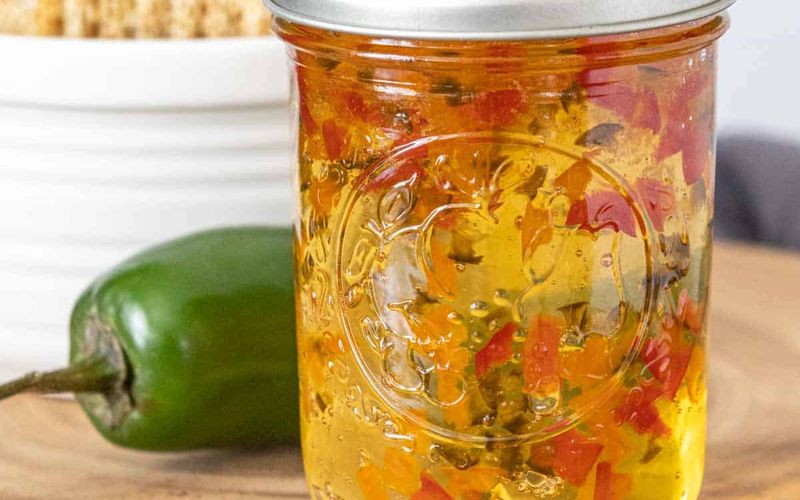
This is the core jalapeño pepper jelly recipe method, built around fresh green jalapeños and liquid pectin.
Prepping and Chopping the Peppers
Finely dice 1½ cups (about 225g) of fresh jalapeños and ½ cup (about 75g) of green bell pepper — a mix of fine and slightly coarser chop gives the finished jelly more visual texture than a fully uniform mince. Wear gloves during this step, since capsaicin transfers to skin easily and lingers well past the point when hands have been washed.
Cooking the Jelly to the Right Temperature
Combine the peppers, 6½ cups (1.3kg) sugar, and 1½ cups (360ml) white vinegar in a large, heavy-bottomed pot. Bring to a full, rolling boil over high heat — one that continues to boil even while stirring — and hold it there for 1 minute before adding the liquid pectin. Add pectin, return to a boil for exactly 1 minute more, then remove from heat and skim off any foam from the surface.
Canning vs. Refrigerating
For a refrigerator version, ladle the jelly into clean jars, cool to room temperature, and refrigerate for up to 3 weeks. For a shelf-stable result, process the filled, sealed jars in a boiling water bath for 10 minutes, per the USDA Complete Guide to Home Canning, which specifies processing times and jar-sealing requirements for fruit jellies. Shelf-stable jars keep up to a year in a cool, dark pantry.
Cream Cheese and Pepper Jelly — The Appetizer Version
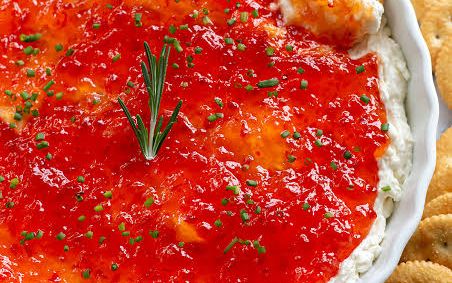
Cream cheese and pepper jelly is probably the most searched use for this spread, and the ratio that works most reliably is an 8 oz (225g) block of cream cheese sitting flat on a plate or board, then covered with about ½ cup (120ml) of jelly poured directly over the top — just enough to coat the cream cheese fully and pool slightly around the edges. Block cream cheese holds its shape better than whipped cream cheese under a liquid jelly, which tends to sink into whipped cream cheese rather than sit on top of it. The combination works because the dense, rich fat of the cream cheese cuts the sweetness and heat of the jelly in equal measure, making each cracker load more balanced than either element alone.
For a pepper jelly cream cheese dip where the two are blended rather than layered, beat softened cream cheese with about a third of the jelly quantity into a smooth, spreadable dip — this version works better for scooping with thicker crackers or vegetable sticks than the layered version, which requires a flat cracker to scoop cleanly.
Comparison Table: Pepper Jelly Variations at a Glance
Choosing a variation comes down to heat tolerance, intended use, and visual appeal — factors that affect which direction is worth making first.
| Variation | Main Pepper | Heat Level | Color | Best Use |
|---|---|---|---|---|
| Classic Green | Green jalapeños | Medium | Bright green | Crackers, cream cheese, glazing |
| Red Pepper Jelly | Red bell + red jalapeño | Mild–medium | Deep red | Gift jars, cheese boards |
| Hot Pepper Jelly | Jalapeño + habanero blend | High | Varies | Bold glazes, spicy appetizers |
| Sweet-Only (No Heat) | Red or orange bell pepper only | None | Orange–red | Kid-friendly, mild spreads |
What to Do With Pepper Jelly Besides Crackers
The most underused application for pepper jelly recipes is as a finishing glaze: brush it directly onto chicken thighs or pork tenderloin in the last 5–10 minutes of grilling or roasting, where the sugar caramelizes against the heat and the pepper flavor concentrates into a sticky, lacquered coating. Stirring a tablespoon into a vinaigrette adds a sweet-heat note that pairs well with a bitter green like arugula. Using it as a condiment on a fried egg sandwich, between the egg and cheese, gives the same sweet-spicy contrast as the cream cheese version but in a breakfast format.
Tips for Pepper Jelly That Sets Every Time
Don't reduce the sugar from the recipe's specified amount, since the sugar-to-pectin ratio is structural — reducing it might lower the sweetness slightly but it also prevents the pectin from gelling correctly, which produces the same syrupy result as using the wrong pectin type. Bring the mixture to a full rolling boil that can't be stirred back down before adding pectin; a partial boil that subsides when stirred hasn't reached the temperature needed for proper activation. Test the set before committing to canning by dropping a small spoonful onto a cold plate from the freezer — if it gels and holds its shape within about a minute, the batch is ready; if it stays liquid, boil for another 1–2 minutes and test again.
FAQ
What is pepper jelly made of?
Pepper jelly is made from fresh peppers (hot, sweet, or a combination), sugar, white vinegar, and pectin. The sugar and vinegar form the preservation base, the peppers add flavor and heat, and the pectin is what sets the mixture into a spreadable jelly rather than a loose sauce or syrup.
Why didn't my pepper jelly set?
The most common cause is not reaching a full rolling boil before adding pectin, or reducing the sugar below the recipe's specified amount. Pectin requires both adequate sugar and a high enough temperature to activate properly — either shortcut tends to result in a syrupy consistency rather than a firm jelly.
How long does homemade pepper jelly last?
Properly canned and sealed pepper jelly keeps for up to a year in a cool, dark pantry, since the sugar and vinegar act as preservatives. Once opened, it keeps for about 3 months refrigerated. Jars that haven't been processed in a water bath should be refrigerated and used within 3 weeks.
What do you eat pepper jelly with?
Cream cheese and crackers is the most classic pairing, but pepper jelly also works well as a glaze on grilled chicken or pork, stirred into a vinaigrette, or spread onto a breakfast sandwich. Its sweet-spicy profile pairs particularly well with sharp cheddar, brie, or aged gouda on a cheese board.
Can pepper jelly be made less spicy?
Yes — reducing the ratio of hot peppers to sweet bell peppers, removing all seeds and membranes before chopping, or replacing most of the jalapeños with red bell pepper are all straightforward ways to lower the heat while keeping the same basic jelly-making method and texture.
Conclusion
Pepper jelly earns its shelf space more than most pantry preserves, since the same jar works as a cracker spread, a protein glaze, a dip base, and a cheese board accent without modification. Starting with a classic green jalapeño version gives the most useful baseline — bright, moderately spicy, and versatile across all of those formats — and adjusting heat level up or down from there is straightforward once the base method is familiar. For another baked good that pairs well alongside it, the zucchini bread recipe makes a natural companion to a sweet-spicy spread, and the garlic bread recipe works well on a wider cheese and spread plate as an alternative to plain crackers.
Tags