Chocolate Modak Recipe: The 15-Minute Festive Sweet Everyone Asks For
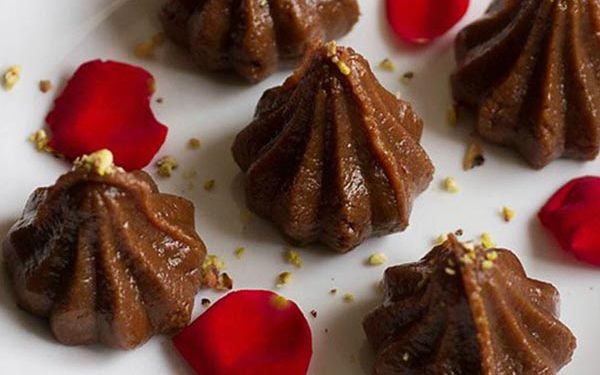
This easy chocolate modak recipe combines chocolate and khoya for a delicious homemade festive sweet that’s ready in just 15 minutes.
Prep time
10 minutes (+ 25 minutes refrigerator setting)
Cook time
5 minutes (melting)
Cuisine
Indian (Modern/Fusion — Maharashtrian Festival)
Ingredients
Nutrition
A chocolate modak recipe occupies a specific place in the Ganesh Chaturthi sweet lineup — it's the one that gets requested by children, appreciated by guests who find traditional Indian sweets too rich or unfamiliar, and made by hosts who want something visually impressive without spending the morning managing rice flour dough. This guide covers two genuinely different versions: the pure chocolate shell set in a modak mould (the faster, cleaner option) and the chocolate mawa version where cocoa or melted chocolate folds into khoya for a denser, more traditionally-textured result. Both versions qualify as a Ganesh Chaturthi sweet and both belong on the festival prasad plate. For the complete festival sweet planning list, see the full Ganesh Chaturthi recipes guide.
Two Types of Chocolate Modak — Which One to Make
Most searches for chocolate modak conflate two preparations that behave quite differently. The pure chocolate shell version uses only melted chocolate poured into a modak mould — it's essentially a chocolate confection shaped like a modak, with no khoya or rice flour involved. The chocolate mawa version uses the same khoya base as a traditional mawa modak with cocoa powder or melted chocolate worked in — it's denser, more filling, and closer in texture to a conventional Indian sweet than to a moulded chocolate. Knowing which one is being made before starting matters because the techniques, equipment, and failure modes are different for each. For the traditional steamed version on the same puja plate, the ukadiche modak recipe covers the full rice flour technique.
Easy Chocolate Modak Recipe — The Pure Chocolate Shell Version
The easy chocolate modak recipe using only chocolate and a mould is genuinely the fastest festive Indian sweets preparation in the entire Ganesh Chaturthi lineup. A batch of 12 modak uses approximately 200g of chocolate — no other ingredients required for the shell, though fillings can be added.
Choosing the Chocolate
Compound chocolate — made with vegetable fat rather than pure cocoa butter — is the correct starting point for beginners. It melts evenly, sets predictably at refrigerator temperature without tempering, and produces clean unmoulding. Couverture chocolate (real cocoa butter content) produces a glossier surface and a more pronounced snap, but requires tempering (bringing the chocolate to specific temperatures in sequence) to set properly — without tempering, couverture develops a dull, streaky bloom on the surface. According to USDA FoodData Central, dark chocolate with high cocoa content contains more flavonoids and less sugar than milk chocolate — useful context when choosing between dark and milk compound for a more balanced festival sweet.
Melting and Pouring Into the Mould
Chop 200g of compound chocolate into small, even pieces. Melt using a double boiler — a heatproof bowl set over a pan of barely simmering water — stirring until smooth, keeping the bowl from touching the water surface. Alternatively, microwave in 30-second intervals at 50% power, stirring between each interval. For a solid modak, fill the mould completely and tap gently on the counter to release air bubbles. For a hollow modak with room for filling, pour a thin layer into each mould half, rotate to coat the sides, tip out the excess, and refrigerate for 5 minutes to set the shell before adding filling.
Setting and Unmoulding
Compound chocolate sets cleanly in the refrigerator in 20–25 minutes. The modak is ready to unmould when the chocolate pulls visibly away from the mould sides and the back of the mould feels cold and firm with no soft spots. Flex the mould gently — the modak should release without force. Forcing an unset modak breaks it along the seam or leaves fingerprints in the surface that don't disappear after re-setting.
Chocolate Modak Recipe for Ganesh Chaturthi — Adding a Filling
The filled version of this chocolate modak recipe for Ganesh Chaturthi is the one worth making when the occasion matters more than the speed — it takes an additional 10 minutes but produces something that functions genuinely as both a traditional prasad and a modern sweet.
Coconut-Jaggery Filling
Cook 3 tablespoons of grated fresh coconut with 2 tablespoons of grated jaggery in a small pan over low heat for 3–4 minutes until the jaggery melts and the mixture comes together. Cool completely before using. Spoon a small amount into the center of a set chocolate shell half before pressing the two halves together — this creates a hybrid modak with a chocolate exterior and a filling that echoes the ukadiche modak's traditional coconut-jaggery interior.
Chocolate Ganache Filling
For a fully chocolate experience, heat 50ml (3 tablespoons) of heavy cream to just below a boil, pour over 50g of chopped dark chocolate, and stir until smooth. Cool until the ganache is thick but still pourable. Spoon into the set shell halves as a center layer before sealing — this is the chocolate dessert version suited for guests who want something indulgent rather than festive.
Chocolate Mawa Modak Recipe — The Khoya Version
The chocolate mawa modak recipe produces a denser, fudgier result than the pure chocolate version — it looks like a dark, glossy modak with a barfi-like texture rather than a hollow or solid chocolate shell.
Using Cocoa Powder vs. Melted Chocolate
Cocoa powder produces a deeper, more intense, slightly bitter chocolate flavor. Two tablespoons of good-quality unsweetened cocoa powder per 250g of khoya produces a strong chocolate note that doesn't get lost under the sweetness of the powdered sugar. Melted dark or milk chocolate (50–75g per 250g khoya) adds fat alongside flavor, producing a smoother, richer, less intense result that reads as a chocolate sweet rather than a dark chocolate sweet. Both work — the choice depends on how dominant the chocolate flavor needs to be.
Chocolate Modak Recipe with Khoya
This chocolate modak recipe with khoya follows the same base method as the plain mawa modak: crumble 250g of khoya into a heavy-bottomed pan over the lowest heat, stir continuously until it melts and becomes smooth, then remove from heat. Add 2 tablespoons of cocoa powder or 60g of melted dark chocolate, 4 tablespoons of powdered sugar, and ½ teaspoon of cardamom powder. Stir until fully combined, spread onto a plate to cool to just warm, then press into a greased modak mould or shape by hand. The mawa modak recipe covers the full khoya method that this chocolate version builds directly on — the consistency tests and heat management are identical.
Homemade Chocolate Modak Recipe — Without a Mould
The chocolate modak recipe without mould is only practical for the mawa-based version — pure melted chocolate requires a mould to hold its shape during setting and can't be hand-formed. For the homemade chocolate modak recipe without equipment:
Take a portion of the cooled chocolate mawa mixture (about 20–25g), roll into a smooth ball between oiled palms, pinch a peak at the top to create the modak silhouette, and press 8–10 gentle vertical ridges along the sides using a toothpick. The mixture firms quickly and the ridges hold well — this no-mould version works for home prasad distribution where visual uniformity matters less than flavor.
A ganache truffle approach works as an alternative: make a thick ganache from 100g dark chocolate and 3 tablespoons of cream, refrigerate until set enough to roll, then roll into balls and shape using the same peak-and-ridge method. This produces something closer to a chocolate truffle in texture but in the modak shape — more dessert than prasad, but functional for a mixed festival plate.
How to Make Chocolate Modak at Home — Tips for Getting It Right
For the pure chocolate version: work in a kitchen where the ambient temperature is below 25°C (77°F) — above this, compound chocolate softens faster than it sets and produces a dull, slightly sticky surface. Use moulds at room temperature rather than pre-chilled, since a cold mould causes chocolate to set unevenly and can create stress lines along the seam. For the mawa version: cocoa powder burns on contact with a hot pan — always add it off heat after the khoya has finished cooking, never directly into a hot pan. Add powdered sugar off heat for the same reason. For both versions: refrigerate for a minimum of 20 minutes before unmoulding or serving regardless of how firm they feel at room temperature, since the cold firms the surface and produces cleaner presentation.
Chocolate Modak Styles at a Glance
This chocolate modak recipe comparison helps match the version to the occasion, available time, and the audience being served.
| Style | Chocolate Used | Skill Level | Prep Time | Best For |
|---|---|---|---|---|
| Pure chocolate shell | Compound/couverture | Easy | 15 min + 25 min set | Gifting, children, quick prasad |
| Chocolate shell with coconut filling | Compound chocolate | Easy–medium | 25 min + 25 min set | Traditional flavor, festival offering |
| Chocolate mawa (cocoa) | Cocoa powder + khoya | Easy | 20 min + 20 min cool | Dense, filling, traditional texture |
| Chocolate mawa (melted choc) | Dark/milk chocolate + khoya | Easy | 20 min + 20 min cool | Richer, smoother, dessert-adjacent |
Decorating and Presenting Chocolate Modak for the Puja Plate
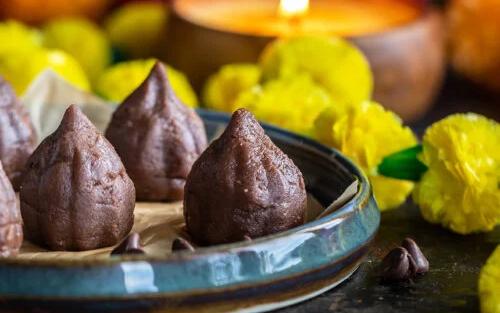
A drizzle of white chocolate over dark chocolate shell modak — melted white compound chocolate in a piping bag or a fork — takes under 2 minutes and immediately elevates the visual from a plain moulded sweet to a mithai-shop-quality presentation. Crushed pistachios or silver cachous pressed onto the surface of mawa modak before the mixture fully sets add texture and color without requiring any additional technique. Edible gold leaf pressed onto the peak of a dark chocolate mawa modak is the fastest way to make a homemade chocolate modak recipe look like a premium gifting sweet — apply with clean, dry fingertips while the surface is still slightly tacky. Browse more vegetarian recipes for the full festival spread for dishes to serve alongside the sweet prasad table.
Storage and How Long Chocolate Modak Keeps
Pure chocolate shell modak stores well — in an airtight container in the refrigerator, it keeps for 5–7 days. At room temperature in a cool, dry environment (below 22°C/72°F), it holds for 1–2 days without bloom developing on the surface. Chocolate mawa modak keeps for 3–4 days refrigerated since the khoya component is a dairy product with a shorter shelf life than pure chocolate. Both versions can be frozen for up to 3 weeks — thaw in the refrigerator overnight rather than at room temperature to prevent condensation from marking the surface of the chocolate.
FAQ
What is chocolate modak?
Chocolate modak is a modern Ganesh Chaturthi sweet shaped in the traditional modak form but made from chocolate rather than the conventional rice flour or khoya base. It comes in two main versions: a pure melted-chocolate shell set in a modak mould, and a chocolate mawa version made from khoya mixed with cocoa powder or melted chocolate.
Can chocolate modak be made without a mould?
Yes — the chocolate mawa version is the easiest to shape without a mould, since the khoya-cocoa mixture holds its form when cooled. Roll into a ball, pinch a peak at the top, and press gentle ridges with a toothpick. Pure melted chocolate requires a mould to set in the correct shape.
Which chocolate is best for chocolate modak?
Compound chocolate (chocolate with vegetable fat replacing cocoa butter) is the most forgiving for beginners since it sets predictably without tempering. Dark compound chocolate produces a cleaner, more balanced flavor. Couverture chocolate (real cocoa butter) produces a glossier result but requires tempering for a smooth, snap finish.
How long does chocolate modak last?
Pure chocolate shell modak keeps for 5–7 days in an airtight container in the refrigerator. Chocolate mawa modak keeps for 3–4 days refrigerated since it contains khoya. Both versions keep at room temperature for 1–2 days in a cool environment but soften in warm or humid conditions.
Is chocolate modak offered as prasad?
Yes — chocolate modak is increasingly accepted as a festival prasad in urban and modern household traditions, offered alongside or in place of traditional steamed or mawa modak. It's particularly common in households with young children and in cities where traditional Indian mithai shops may not be easily accessible.
The chocolate modak recipe decision framework is simple: the pure chocolate shell version for speed, visual impact, and child-friendly gifting; the chocolate mawa version when the festival prasad context matters and a denser, more traditionally textured sweet is the goal. Either version comes together faster than any other modak style — the pure shell in 15 minutes of active time, the mawa version in 20 — which makes this the most practical sweet on a busy preparation day when the ukadiche modak needs full attention on the morning of the puja.
Tags