Ukadiche Modak Recipe: The Only Guide You Need for Perfect Pleats
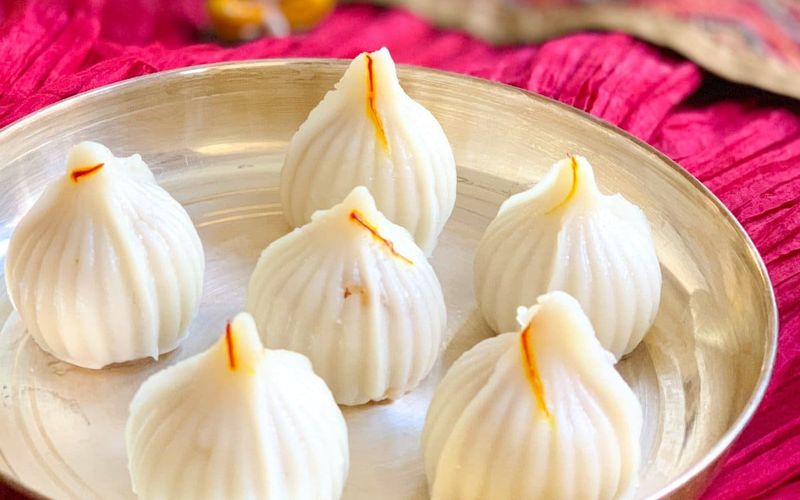
This ukadiche modak recipe covers the rice flour dough, coconut-jaggery filling, and hand-pleating technique — traditional Ganpati prasad done right.
Prep time
30 minutes (including filling cooling time)
Cook time
12 minutes (steaming)
Cuisine
Indian (Maharashtrian)
Ingredients
Nutrition
The ukadiche modak recipe holds a specific place in Maharashtrian cuisine that no other festival sweet quite matches — it's the primary prasad offered to Lord Ganesha during Chaturthi, made fresh on the puja morning, and considered incomplete if the pleats don't hold or the shell cracks. That technical precision is what makes it genuinely difficult on a first attempt. This guide covers every failure point in the order it appears: filling moisture, dough temperature, shaping method (with and without a mould), steaming, and the troubleshooting fixes that make the second batch dramatically better than the first. For the full festival sweet list including besan ladoo, coconut ladoo, and karanji, see the Ganesh Chaturthi recipes guide.
What Makes Ukadiche Modak Different From Other Modak
"Ukadiche" means steamed in Marathi — which immediately distinguishes this from fried modak, mawa modak, and chocolate modak. Where mawa modak requires only cooking khoya and shaping it into a mould, and chocolate modak is essentially a moulded confection, the ukadiche modak recipe demands three separate technical skills: cooking the filling to the right moisture level, preparing a rice flour dough that's pliable enough to pleat without cracking, and steaming the finished modak until the shell turns translucent. Each of those three steps has its own failure mode that doesn't appear in the other versions. As the most sacred Ganesh Chaturthi sweet and the most structurally demanding, it's also the one most worth learning properly — most Maharashtrian sweet traditions consider it the benchmark of a home cook's festival preparation.
Ingredients for a Traditional Ukadiche Modak Recipe
A batch of 21 modak (the traditional puja offering count) uses the following quantities.
For the Coconut-Jaggery Filling
1½ cups (about 135g) fresh grated coconut, ¾ cup (about 150g) grated jaggery, ½ teaspoon cardamom powder, a pinch of freshly grated nutmeg, and 1 tablespoon white poppy seeds (optional, but traditional in some Maharashtrian households). Fresh coconut is significantly better than desiccated here — it has natural moisture that prevents the filling from becoming too dry and provides a sweet, milky richness that dry coconut simply doesn't deliver. According to USDA FoodData Central, fresh coconut contains significantly more moisture and naturally occurring sugars than its desiccated form, which is why substituting one for the other produces a noticeably different filling texture.
For the Rice Flour Dough
1 cup (140g) fine rice flour (not coarse or medium ground), 1 cup (240ml) water, ½ teaspoon oil or ghee, and a pinch of salt. Fine-ground rice flour is non-negotiable for this ukadiche modak recipe with rice flour — coarser grinds produce a dough that resists the thin, flexible press needed to hold 14 pleats without cracking at the edges.
Making the Coconut-Jaggery Filling First
The filling goes into the pan before the dough is touched, because it needs to cool completely — warm filling causes the dough to sweat and crack during shaping, and this sequencing error is responsible for more failed batches than almost any dough mistake.
Heat a heavy-bottomed pan over medium heat, add the fresh grated coconut and grated jaggery together, and stir continuously until the jaggery melts fully and the mixture comes together into a cohesive mass that leaves the sides of the pan when stirred — about 5–8 minutes. Add cardamom powder, nutmeg, and poppy seeds in the last minute, stir through, and spread the filling onto a plate to cool completely. The finished filling should feel slightly moist but not wet when pressed between two fingers. This ukadiche modak recipe with coconut and jaggery filling is the standard — a wet filling that releases moisture during steaming is the primary cause of the shell bursting, and a dry filling that's been overcooked crumbles rather than holding together when bitten.
How to Make the Rice Flour Dough for Ukadiche Modak
This section is where most first attempts at how to make ukadiche modak fall apart, and the reason is almost always water temperature.
The Water Temperature Rule
Bring the full cup (240ml) of water to a full, vigorous rolling boil — not a gentle simmer, not small bubbles, but a hard boil that can't be stirred back down. Add the salt and ghee to the boiling water, remove the pan from heat immediately, and add all the rice flour at once. Stir rapidly and continuously with a wooden spoon until the mixture comes together into a smooth, non-sticky dough. Water that wasn't at a full boil when the flour went in produces partial starch gelatinization — the dough looks similar but cracks the moment pressure is applied during pleating, because the starch network hasn't formed properly.
Testing the Dough Consistency
Cover the dough with a damp cloth and rest for 5 minutes. The correct modak dough feels warm, pliable, and smooth — it can be pressed into a thin circle without the edges cracking, pinched cleanly without sticking to oiled fingers, and holds its shape after forming. If the dough feels dry and cracks when pressed: add a tablespoon of warm (not cold) water, work it in with oiled hands, and test again. If the dough sticks to hands even with oil: it's too hot — let it cool for another 2 minutes before working.
Shaping Ukadiche Modak — With Mould and Without
Both methods produce a genuine steamed modak recipe result. The hand method produces the more traditional shape; the mould method produces a more uniform appearance. Neither is superior — the choice depends on skill, time, and the occasion.
Hand-Pleating Method (Traditional Paat)
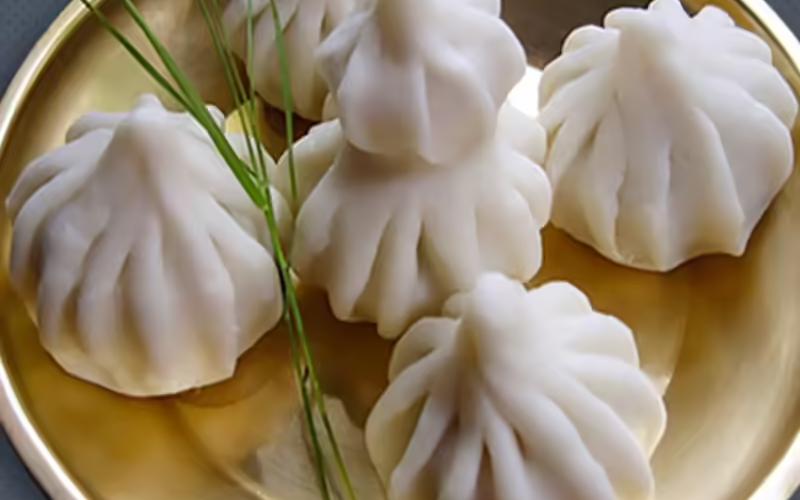
Take a dough ball of about 30–35g, oil both palms generously, and press the ball flat into a thin circle — about 3–4 inches (7–10cm) in diameter — using the thumb and index finger of one hand while rotating. The center should be slightly thicker than the edges, since the edges will be pleated. Place 1–1.5 teaspoons of filling in the center. Pinch a small fold at the edge, then continue pinching folds at equal intervals around the circumference — the traditional count is 14 pleats, though 10–12 works for a first attempt. Bring all pleats together at the top and pinch firmly to seal, forming the characteristic peak. Oil is the single most important variable in this method — without it, the dough sticks, the pleats don't separate cleanly, and the whole shape collapses.
Using a Modak Mould
This is the ukadiche modak recipe without mould alternative for traditionalists, but for anyone learning the recipe, a silicone modak mould removes all the fine-motor uncertainty of pleating. Lightly oil both halves of the mould, press dough into each half to create a thin, even shell, add filling to one half, press both halves together firmly, and unmould. The seam where the two halves meet needs a careful press with oiled fingers to prevent a visible gap that opens during steaming.
Easy Ukadiche Modak Recipe — Steaming Correctly
The easy ukadiche modak recipe steaming step is simpler than most people expect. Grease a steamer basket or idli steamer plate with a thin layer of oil, or line with fresh banana leaf pieces. Arrange the shaped modak with at least 1cm (½ inch) of space between each one — they expand slightly during steaming and will stick if touching. Steam over medium-high heat for 10–12 minutes.
Doneness is visual: the outer shell transitions from an opaque, chalky white to a slightly translucent, glistening surface that looks set rather than raw. Remove from the steamer and finish each one with a small drizzle of warm ghee before serving as Ganpati prasad. A pressure cooker without the weight placed on top — used only as a steaming vessel with the lid closed — works as an alternative when no dedicated steamer is available.
Ukadiche Modak Methods at a Glance
This ukadiche modak recipe comparison helps match the approach to the available equipment and skill level.
| Method | Shaping | Steaming Vessel | Skill Level | Best For |
|---|---|---|---|---|
| Traditional hand-shaped | Finger pleating (14 pleats) | Idli steamer / traditional | Intermediate | Authentic puja offering |
| Modak mould | Silicone/metal mould | Any steamer | Easy | Beginners, speed |
| Pressure cooker steaming | Either method | Pressure cooker (no weight) | Easy | No steamer available |
| Mini modak | Hand-shaped, smaller | Any steamer | Intermediate | Prasad distribution, large batches |
Troubleshooting — Why Ukadiche Modak Cracks, Sticks, or Bursts
Dough cracking during pleating: Water wasn't at a full rolling boil, or the dough cooled too much between shaping. Return the dough to a slightly warm state by covering with a freshly dampened hot cloth for 2 minutes, then re-oil hands and continue.
Modak bursting during steaming: The filling was too wet — either the jaggery released moisture during cooking and the mixture wasn't cooked down far enough, or desiccated coconut was used instead of fresh (which absorbs less moisture and leaves more free liquid in the pan). The other cause is dough rolled too thin at the base, which can't support the steam pressure from the filling.
Dough sticking to fingers or mould: Insufficient oil on hands or mould, or the dough is still too warm to work. Oil palms and fingers generously before every single modak — this is not a step to do once and carry through. For a mould, re-oil between every 2–3 modak.
Modak sticking to steamer: The basket wasn't greased, or no banana leaf was used. Run a thin knife carefully around the base of each stuck modak and lift gently — forcing them off breaks the shell.
Tips for Perfect Ukadiche Modak Every Time
Prepare the filling and let it cool completely before starting the dough — this sequencing rule prevents every warm-filling-related failure and costs no extra time since the dough comes together in 5 minutes while the filling rests. Keep the dough covered with a damp cloth at all times — exposed rice flour dough dries out within 2–3 minutes and becomes unworkable without reworking. Shape one modak at a time, keep the rest covered, and never try to shape multiple modak simultaneously in the early stages. Do a test steam with a single modak before committing the full batch — if the test modak holds its shape and doesn't crack or burst, the batch is ready. These habits define what separates a reliable traditional ukadiche modak recipe result from an inconsistent one. Browse more vegetarian recipes for the full festival spread for dishes that complement the prasad table.
Regional Variations of Ukadiche Modak
Konkan-style ukadiche modak uses a higher coconut-to-jaggery ratio for a more prominently coconut-forward filling that's less sweet than the standard version. Goa-style adds 2–3 tablespoons of fresh coconut milk to the boiling water when making the dough, which produces a richer, slightly softer outer shell with a mild coconut flavor in the casing itself rather than only in the filling. Karnataka versions (called kadubu or modakam) use similar ingredients but sometimes include chana dal in the filling alongside coconut and jaggery. Tamil Nadu's kozhukattai follows essentially the same method under a different regional name. All of these share the steamed rice flour outer shell — the regional identity lives in the filling's spice profile and sweetness level.
FAQ
What is ukadiche modak?
Ukadiche modak is a traditional Maharashtrian steamed sweet — "ukadiche" means steamed in Marathi. It consists of a soft rice flour outer shell filled with sweetened fresh coconut and jaggery, shaped into a distinctive pleated form and steamed until translucent. It's the primary prasad offered to Lord Ganesha during Ganesh Chaturthi.
Why does my modak dough crack?
Dough cracking almost always means the water wasn't at a full rolling boil when added to the rice flour, or the dough cooled too much before shaping began. Work with warm dough, keep it covered with a damp cloth between shaping each modak, and oil fingers generously before pleating.
Can ukadiche modak be made without a mould?
Yes — traditional ukadiche modak is hand-shaped using oiled fingers, with pleats (paat) created by pinching the dough edge at equal intervals and bringing them together at the top. A mould speeds up the process for beginners but isn't required, and most Maharashtrian households make it entirely by hand.
How long do steamed modak last?
Ukadiche modak are best eaten on the day they're made. They stay soft for 3–4 hours at room temperature after steaming, but harden noticeably as they cool. Refrigerated, they last up to a day but must be resteamed briefly or microwaved with a splash of water to soften before eating.
What rice flour is best for ukadiche modak?
Fine-ground rice flour (not coarse or medium ground) produces the smoothest, most pliable dough for shaping. Some cooks use freshly made rice flour (soaked rice dried and ground) for an even more tender shell. Store-bought fine rice flour works reliably for most home kitchens without any additional processing.
The first batch of this ukadiche modak recipe is rarely the one that goes to the puja plate, and that's genuinely normal — the dough and the pleating both respond to muscle memory more than to precise measurement. A practice run a week before the puja is worth far more than reading through the recipe an extra time. The filling technique is consistent from the first attempt; the dough handling and pleating improve rapidly with each batch. By the second or third attempt, this becomes one of the more satisfying recipes in any festival cooking repertoire. For another festival's prasad preparation sequence, the Janmashtami recipes post covers bhog planning with a similar morning-of timeline.
Tags