Besan Ladoo Recipe: How to Roast Besan for Perfect Ladoos
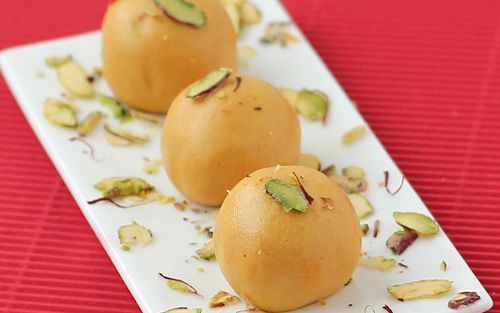
This besan ladoo recipe shows how to roast gram flour with ghee for the perfect texture, with simple tips for adding sugar, cardamom, and shaping ladoos at home.
Prep time
10 minutes (+ 15 minutes cooling and rolling)
Cook time
25 minutes (roasting)
Cuisine
Indian (Maharashtrian / North Indian)
Ingredients
Nutrition
Every failed besan ladoo recipe batch traces back to the same two mistakes: flour that wasn't roasted long enough, leaving a raw, chalky, slightly sour flavor underneath all the sugar — or flour that went past the window and burned, leaving a bitter aftertaste that no amount of cardamom covers. The recipe itself is simple. The roasting is where it lives or dies, and most recipes describe it as "roast until golden" without explaining what golden looks, smells, and feels like at the right moment. This guide is built around that moment — covering the full three-sense cue that signals the correct end point, along with the complete method, rava comparison, regional variations, and the storage facts that make this one of the most practical festival sweets to prepare in advance. For the complete Ganesh Chaturthi festival sweet list, see the full Ganesh Chaturthi recipes guide.
Why the Roasting Step Makes or Breaks a Besan Ladoo Recipe
Raw besan — chickpea flour, also called gram flour — tastes unpleasant in a way that's hard to describe until experienced: slightly sour, gritty, and vegetal, with none of the nuttiness that makes a well-roasted besan ladoo satisfying. Roasting in ghee does three things simultaneously: it drives off the volatile compounds responsible for that raw flavor, it triggers the Maillard reaction between the flour proteins and residual sugars (producing the nutty, aromatic quality that defines a good ladoo), and it changes the flour's particle structure from dry and gritty to smooth and slightly cohesive. Under-roasted besan ladoo recipe batches are by far the more common failure — the flour looks close to done at 10 minutes but still tastes raw at the center of each particle. Over-roasting produces a bitter, brown flavor that also can't be corrected after the fact. The sweet spot sits between those two points and is reliably identifiable by three simultaneous cues — covered in the method section below.
Ingredients for the Best Besan Ladoo Recipe
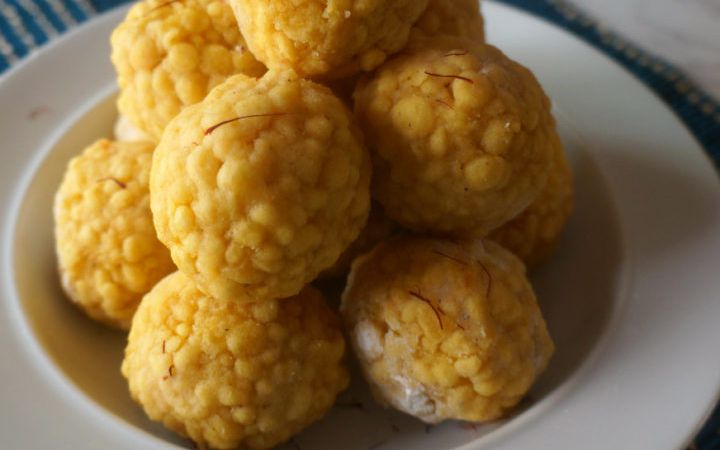
A batch of 20–25 ladoos uses: 2 cups (200g) of fine besan (gram flour), ½ cup (110g) of pure desi ghee, 1 cup (120g) of powdered sugar, ½ teaspoon cardamom powder, and optional 2 tablespoons of chopped cashews, almonds, or raisins. According to USDA FoodData Central, chickpea flour is a notably high-protein, high-fiber flour compared to refined wheat flour — a relevant credential when this Indian ladoo is distributed as festival prasad with nutritional value worth noting.
Choosing the Right Besan
Fine-ground besan is the correct starting point — coarser grinds produce a grainier, less smooth ladoo that doesn't compress as cleanly into a ball. Most bag labels in Indian grocery stores specify "fine" or "superfine"; when in doubt, rub a small amount between two fingers — the correct grind feels almost silky, not gritty. The high protein Indian breakfast guide on this site covers besan's nutritional profile in the context of moong dal chilla and besan chilla — the same chickpea flour used across both festival sweets and everyday protein-forward cooking.
Ghee Quality and Quantity
Pure desi ghee — made from cultured butter or from full-fat milk — produces a noticeably more aromatic ladoo than refined or clarified ghee, because it retains more of the milk's flavor compounds through the clarification process. The ratio that works reliably: approximately 1 part ghee to 2 parts besan by volume, or ½ cup ghee to 2 cups besan. Less ghee produces a dry, crumbly ladoo that won't hold its shape when rolled; more produces a very rich, dense result that can feel heavy.
Easy Besan Ladoo Recipe — The Full Method
This is the complete easy besan ladoo recipe in the order it needs to happen.
Heat a heavy-bottomed pan or kadhai over the lowest possible flame. Add the ghee and let it melt fully. Add the besan all at once and begin stirring immediately with a flat spatula or wooden spoon, spreading and folding the mixture continuously to ensure every part of the flour makes contact with the ghee and the hot pan surface.
The Roasting Process — What to Watch, Smell, and Feel
The roasting takes 15–25 minutes at low heat, and the end point has three simultaneous markers. Visual: the mixture transitions from pale, dull yellow to a warm, even golden color — not brown, not cream, but the color of a well-baked shortbread cookie. Aroma: the raw, slightly sour smell of fresh chickpea flour gives way to a distinct nutty, popcorn-adjacent warmth that fills the kitchen noticeably. Tactile: in the early stages, the mixture feels clumped and heavy when stirred; at the correct end point, it flows more freely in the pan, almost like a loose, smooth paste rather than a sticky dough. When all three align — the color, the smell, and the flow — remove the pan from heat immediately. The residual heat in a heavy pan continues cooking the besan for another minute after the flame goes off, so pulling it at the right moment rather than a minute past is important.
Cooling Before Adding Sugar
Spread the roasted besan onto a wide plate or tray and allow it to cool to warm — the mixture should feel comfortable to the back of the hand rather than hot. This cooling step is non-negotiable: powdered sugar added to hot besan melts partially, producing a dense, sticky mass that clumps rather than distributing evenly through the flour. A fully cooled mixture produces a fine, sandable quality that gives the finished ladoo its characteristic smooth texture. Add powdered sugar and cardamom powder to the warm mixture and mix thoroughly.
Rolling the Ladoos
Take a small portion (about 30–35g per ladoo), press firmly in oiled palms, and roll into a smooth ball. The mixture needs to be still warm enough to feel pliable when compressed — a completely cold mixture won't compress without cracking along the surface. Work steadily through the batch before it cools entirely; if it does cool too much, microwave for 15 seconds to restore workability.
Homemade Besan Ladoo Recipe — Rava vs. Without Rava
The besan ladoo recipe without rava version is the pure, smooth-textured standard. Some regional versions incorporate 2–3 tablespoons of fine semolina (sooji/rava) roasted separately and combined with the besan — the rava adds a slightly coarser, nuttier dimension and a mild additional texture that some families prefer. A pure besan version (without rava) produces a more uniform, smooth ladoo that looks and feels more polished and is the better choice for festival gifting where visual consistency matters. A besan laddu recipe with rava works well for everyday eating where the texture variation is welcome rather than distracting. Both are legitimate preparations — the distinction is useful mainly when choosing which to make for a specific occasion.
Traditional Besan Ladoo Recipe — Regional Variations
The traditional besan ladoo recipe varies significantly between regions. Rajasthani versions use a higher ghee ratio — sometimes up to equal parts ghee and besan by volume — and sometimes incorporate a small amount of milk powder or mawa for added richness. Maharashtrian versions run leaner on ghee and more prominent on cardamom, producing a drier, more intensely spiced ladoo. North Indian temple-style versions occasionally combine besan with boondi flour (very finely powdered boondi) for a slightly different texture profile. These variations explain why a besan ladoo encountered at one regional celebration can taste noticeably different from a version made to the same basic recipe in another household — the technique is consistent, but the ratios and additions shift by tradition.
Besan Ladoo Roasting Methods at a Glance
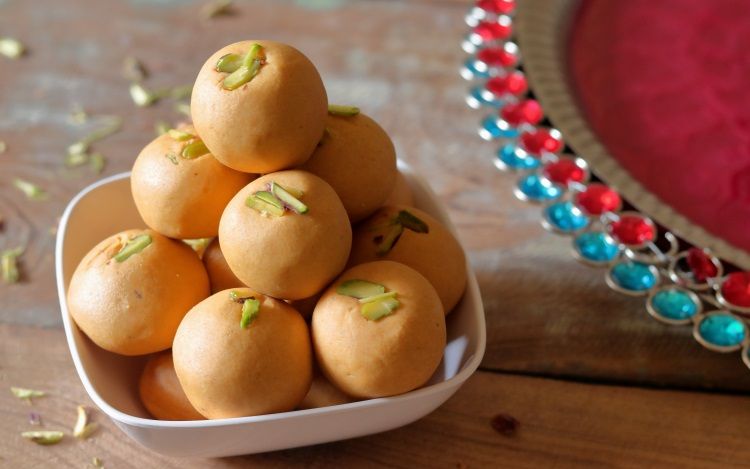
Roasting method is the single most important variable in any besan ladoo with ghee recipe, and the choice between methods affects both quality and convenience.
| Roasting Method | Heat Level | Time | Result | Best For |
|---|---|---|---|---|
| Low and slow | Very low | 20–25 min | Most even, aromatic | Best flavor, festival quality |
| Medium-low | Medium-low | 12–15 min | Slightly uneven | Faster but needs constant attention |
| Dry roast (no ghee first) | Low | 10 min | Less smooth texture | Dietary variation, less ghee |
| Pressure cooker method | N/A | 15 min | Even, hands-off | Alternative for large batches |
Besan Ladoo Recipe for Ganesh Chaturthi — Scaling and Timing
For a besan ladoo recipe for Ganesh Chaturthi batch scaled to 50–100 ladoos, multiply all ingredients proportionally but roast in no more than 2-cup portions of besan at a time — a larger quantity in the pan roasts unevenly since the center of the mixture gets less direct heat contact than the edges. Roasted besan (before sugar is added) keeps at room temperature in a covered bowl for 2 days without any loss of quality, which means the roasting step can be done in stages across two evenings before the puja morning. This fits the homemade besan ladoo recipe preparation timeline well — roasting spread across two days, rolling done on the day before, and ladoos ready with 2 full days before the puja.
Tips for Besan Ladoo That Hold Shape and Taste Right
Always use the lowest flame available — medium heat seems faster but produces uneven roasting where the outer layer of flour toasts while the inner particles stay raw. Plan for 20 minutes and treat anything under 15 minutes on low heat with suspicion. Use powdered sugar exclusively — granulated sugar won't dissolve into the warm mixture and produces a gritty ladoo regardless of how thoroughly it's mixed. Don't add the sugar until pressing a palm firmly on the mixture surface feels comfortable — if it's too hot to hold the hand there, it's too hot for the sugar. Roll immediately after mixing while the warmth holds; a cold mixture can be refreshed briefly, but texture is best from a first roll. The mawa modak recipe uses the same principle of low-heat, continuous stirring for the khoya cooking step — the patience required is identical.
Storage, Shelf Life, and Gifting
Besan ladoo stored in an airtight container at room temperature keeps for up to 2 weeks — one of the longest room-temperature shelf lives of any Indian festival sweet, due to the high ghee content and extremely low moisture level. Refrigerated, it keeps for up to a month. This makes it one of the most practical Indian festive sweets to prepare well in advance of any festival, particularly for large batches intended for distribution. For gifting, individual paper or foil cups inside a dry, airtight box prevent the ladoos from sticking together and protect the surface from handling damage during transport. Browse more vegetarian recipes for the full festival spread for additional Indian festive sweets to pair alongside this ladoo for a complete prasad table.
FAQ
What makes a good besan ladoo?
The key is properly roasted besan — golden in color, nutty in aroma, and smooth-textured rather than gritty. Under-roasted besan produces a raw, chalky flavor; over-roasted burns and tastes bitter. The ghee ratio also matters: too little produces a dry, crumbly ladoo that doesn't hold its shape when rolled.
How long should besan be roasted for ladoo?
On low heat with continuous stirring, besan takes 15–25 minutes to reach the correct golden color and nutty aroma. The exact time depends on pan thickness and heat level. The aroma is the most reliable cue — a distinct popcorn-like nuttiness signals the flour has roasted correctly, regardless of how many minutes have passed.
Can besan ladoo be made without ghee?
Yes, though the texture and flavor change considerably. Coconut oil or clarified vegan butter can substitute for ghee in the roasting step, but the distinctive aroma and richness of a classic besan ladoo depends significantly on ghee's dairy flavor compounds. Without ghee, the ladoo holds together less easily and requires more fat overall.
How long does besan ladoo last?
Besan ladoo stores well at room temperature in an airtight container for up to 2 weeks. Refrigerated, it keeps for a month. The high ghee content and low moisture level make it one of the most shelf-stable Indian festival sweets — making it practical for large-batch festival preparation several days in advance.
Why is my besan ladoo not holding shape?
The most common causes are insufficient ghee (the ladoo won't compress into a ball and crumbles), sugar added while the mixture was still too hot (produces a dense sticky mass), or rolling when the mixture is completely cold (too stiff to compress cleanly). Roll while the mixture is still warm but not hot.
The besan ladoo recipe sequence rewards patience at exactly one point — the 20-minute roast on the lowest available flame — and is straightforward at every step after that. Roasting first and slowly, sugar second into a cooled mixture, rolling third while the warmth holds: that's the full process for how to make besan ladoo at home that produces a genuinely impressive, 2-week-shelf-life festival sweet from a first careful attempt.
Tags