Watermelon Feta Salad with Cucumber and Mint
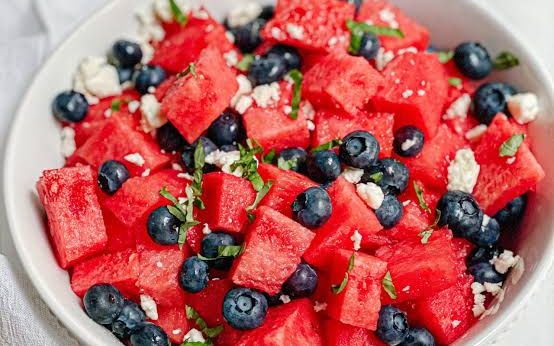
This refreshing watermelon feta salad combines juicy watermelon, creamy feta, crisp cucumber, and fresh mint for a light and flavorful summer dish.
Prep time
10 minutes
Cook time
0 minutes (no cook)
Cuisine
Mediterranean / American Summer
Ingredients
Nutrition
The first time most people eat watermelon feta salad, the combination seems unlikely. Cold, sweet fruit against a crumbly, briny cheese sounds like a mistake until the first bite, at which point the flavor contrast becomes obvious and addictive. The sweetness of the watermelon amplifies the salt of the feta; the feta's sharpness cuts through the watermelon's sugar; and fresh mint lifts the whole combination with a cooling aromatic note that neither ingredient produces on its own. This guide covers the base recipe, the cucumber and mint additions that make it more substantial, the dressing options that work and the ones that compete with the fruit, and the specific serving details that prevent the main complaint about this salad: a pool of pink watermelon juice at the bottom of the bowl.
Why This Flavor Combination Works
The sensory science behind this sweet and savory salad is straightforward: sweet and salty flavors eaten together amplify each other's primary qualities through contrast. Salt suppresses bitterness and enhances sweetness perception, which is why feta cheese against ripe watermelon makes the watermelon taste more intensely of itself rather than diluting it. Fresh mint contributes a cooling aromatic dimension that completes the combination without competing with either the fruit or the cheese, since mint's primary sensory impact is thermal rather than flavor-based in the way that basil or oregano would be. The result is a refreshing salad that tastes more complex than its ingredient list suggests, which is most of the reason it became a recurring fixture on summer tables rather than a novelty.
Easy Watermelon Feta Salad: Ingredients and What Each Does
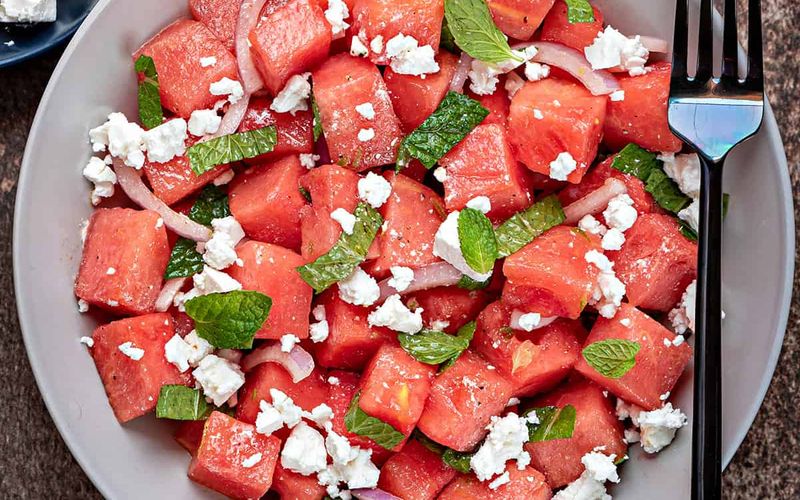
Understanding what each ingredient contributes makes it easier to substitute or scale without losing the balance.
Choosing the Watermelon
Seedless watermelon is the practical choice for a salad: removing seeds mid-bite interrupts eating in a way that's minor in a slice but irritating in a fork-served salad. For selection at the shop, a ripe watermelon feels heavy for its size, produces a hollow sound when tapped on the rind, and has a yellow patch on the underside where it rested on the ground. Cold watermelon, taken directly from the refrigerator and cubed, holds its structure better once dressed than room-temperature fruit, since the cold firms the cell walls slightly and slows the rate at which it releases liquid once cut.
Choosing the Feta
Block feta packed in brine produces a creamier, more complex result than pre-crumbled feta in a dry container. Pre-crumbled feta is uniformly dry and powdery; block feta crumbled by hand breaks into irregular, slightly moist pieces with more interior creaminess that contrasts the watermelon's texture more distinctly. Greek feta made from sheep's milk or a sheep-and-goat blend has a tangier, more complex flavor than Bulgarian or domestic cow's milk feta, though all three work in this recipe.
Fresh Mint and Other Herb Options
Fresh mint torn by hand rather than chopped is the standard. Chopping mint releases more of its essential oils than the salad needs, producing a dominant mint flavor that overshadows the balance between watermelon and feta. Fresh basil is the closest alternative, with a sweeter, less cooling aromatic profile that works particularly well in the Mediterranean version. A handful of arugula added alongside the herbs introduces a peppery bitterness that provides a fourth flavor dimension and turns the salad into something more like a composed summer salad than a simple fruit plate.
Watermelon Feta Salad Recipe: The Base Method
The base watermelon feta salad recipe for four servings uses 6 cups (about 900g) of cubed seedless watermelon, 150g (about 5 oz) of block feta crumbled by hand, a small handful of fresh mint leaves torn, the juice of 1 lime, 1 tablespoon of extra virgin olive oil, and 1 teaspoon of honey.
The Honey Lime Dressing
Whisk the lime juice, extra virgin olive oil, and honey together in a small bowl until the honey dissolves. The honey lime dressing works better for a fruit-forward salad than a plain vinaigrette because the honey's mild sweetness bridges the gap between the lime's acidity and the watermelon's sweetness, while a straight acid-oil vinaigrette can read as sharp against a sweet fruit base. The correct balance is 3 parts lime juice to 1 part olive oil to 1 teaspoon honey, producing a dressing that brightens without dominating. Lime dressing in general works better with watermelon than lemon because lime's flavor profile has a slight tropical edge that complements the melon's sweetness more naturally than lemon's sharper citrus note.
Dressing Quantity and Application
Less dressing is consistently better for this salad than more. The watermelon itself releases liquid once cut and dressed, and this fruit juice combines with the dressing to produce its own additional liquid. Use no more than 2 to 3 tablespoons of dressing for a four-serving salad, add it at the last possible moment, and serve within 10 to 15 minutes. Pouring the dressing over the salad and letting it sit for 30 minutes before serving produces a bowl of pink liquid with floating watermelon and feta rather than a dressed salad.
Watermelon Cucumber Feta Salad: Adding Cucumber for Texture
The watermelon cucumber feta salad is the most popular extension of the base recipe, and the reason is textural: cucumber adds a firm, watery crispness that contrasts the softer, juicier watermelon and the crumbly feta. The cucumber watermelon salad combination works because cucumber's flavor is neutral enough to not compete with either the watermelon or the feta, and its firmer cell structure releases less liquid than watermelon does once dressed, giving the salad slightly more structural integrity over a longer holding time.
For a watermelon feta salad with cucumber, use half an English cucumber, unpeeled and sliced into half-moons about 5mm thick. English cucumber (also called hothouse cucumber) has a thinner skin that doesn't need peeling and fewer seeds than a standard cucumber, producing a cleaner result with less prep. If using a regular cucumber, peel it and scoop out the seeds with a spoon before slicing, since the seedy core releases additional moisture and the thick skin can be tough in a raw salad.
Watermelon Feta Mint Salad: Getting the Mint Right
The watermelon feta mint salad version is where presentation and flavor balance intersect. For four servings, 10 to 12 large mint leaves torn into 2 to 3 pieces each is the right quantity. This is less than most recipes suggest, and the restraint is deliberate: mint's cooling compound (menthol) is powerful enough that an extra handful can shift the salad from "mint-accented" to "mint-forward," where the fruit and cheese recede into the background.
Tear the mint immediately before adding it to the bowl rather than preparing it in advance. Cut or torn mint oxidizes quickly, turning brown at the edges within 30 minutes, which affects both appearance and flavor. Adding it at the last moment, directly onto the dressed salad, keeps the leaves green and aromatic through serving. The watermelon feta salad with mint format is the most visually striking version of this dish for a table presentation, since the dark green torn leaves against the pink watermelon and white feta produce the color contrast that photographs well and looks intentionally composed without requiring any arrangement effort.
Mediterranean Watermelon Feta Salad: The Full Version
The Mediterranean watermelon feta salad brings together watermelon, cucumber, feta, fresh mint, thinly sliced red onion, and Kalamata olives into a dish substantial enough to serve as a first course rather than a simple side. The red onion's sharpness and the olives' brininess add depth and complexity that the base version doesn't have, making this the summer watermelon feta salad version most appropriate for a larger gathering where the dish needs to hold its own on the table.
Soak the red onion slices in cold water for 10 minutes before adding them to the salad. Raw red onion eaten directly releases sulfur compounds that linger in the mouth and overpower the surrounding flavors. A 10-minute cold water soak removes much of that sharpness while leaving the onion's mild sweetness and color. Use Kalamata olives halved rather than whole, since halved olives distribute through the salad more evenly than whole ones, which tend to cluster at the bottom of the bowl. Drizzle extra virgin olive oil over the assembled salad at serving in addition to the honey lime dressing. The Mediterranean salad tradition of finishing with good olive oil at the table rather than mixing it entirely into a dressing produces a more complex result than a single dressed finish does. For a natural pairing with this version, the hummus recipe makes a classic Mediterranean spread that works alongside the salad as part of a larger summer table.
Watermelon Feta Salad Dressing Variations at a Glance
The dressing is the primary customization point in this recipe, since the base ingredients stay consistent across most versions.
| Dressing Style | Key Ingredients | Flavor Profile | Best For |
|---|---|---|---|
| Honey lime (standard) | Lime juice, honey, olive oil | Sweet, bright, citrusy | Everyday, crowd-pleasing |
| Balsamic glaze | Balsamic reduction | Sweet, tangy, deeper | Dinner party presentation |
| Lemon olive oil | Lemon juice, olive oil | Clean, classic | Mediterranean version |
| Chili lime | Lime juice, chili flakes, honey | Sweet, spicy, bright | Adventurous palates |
| Plain (no dressing) | None | Pure fruit and cheese | Cleanest, for very ripe watermelon |
Quick Watermelon Feta Salad: Tips for Best Results
Cut the watermelon into uniform 1-inch (2.5cm) cubes rather than irregular chunks, since uniform pieces produce consistent bites where each forkful contains a proportional amount of each ingredient. Add the feta last, directly onto the assembled watermelon and cucumber, so it sits on top rather than being pressed under the weight of the fruit. Dress at the very last moment and serve immediately. If making ahead, prepare all components separately and refrigerate each uncovered: the watermelon in one container, the cucumber in another, the crumbled feta in a third, and the dressing in a small jar. Combine only at the table. Remove the salad from the refrigerator 5 to 10 minutes before serving since very cold watermelon slightly mutes its own sweetness, and the flavor contrast between the fruit and the feta is more pronounced at just-below-room-temperature than at refrigerator temperature.
Make-Ahead, Storage, and Serving Notes
A dressed easy watermelon feta salad is at its best within 15 minutes of assembly. After 30 to 60 minutes, the watermelon has released enough liquid to dilute the dressing into a thin pink pool and the feta has begun to soften and dissolve at its edges. The salad cannot be meaningfully stored once dressed. The make-ahead approach is the component method described above: watermelon, cucumber, feta, mint, and dressing kept separately for up to 8 hours in the refrigerator and combined only at serving. According to USDA FoodData Central, watermelon is approximately 92% water by weight and provides vitamin C and lycopene per serving, making this genuinely one of the more nutritionally light summer sides on any table. The watermelon feta salad recipe with cucumber and mint is the most complete version, the sprouts salad recipe is another fast, no-cook summer salad worth making alongside this one for a larger spread.
FAQ
How long does watermelon feta salad last?
Dressed watermelon feta salad keeps for about 30 to 60 minutes at its best texture before the watermelon releases liquid and the feta starts to dilute into the juice. For make-ahead purposes, keep the watermelon, feta, cucumber, and dressing separate in the refrigerator and combine only at serving time.
What dressing goes on watermelon feta salad?
A honey lime dressing made from fresh lime juice, extra virgin olive oil, and a small amount of honey is the most common choice, since the citrus brightness and mild sweetness complement the watermelon without adding competing flavors. Balsamic glaze is a popular alternative for a deeper, sweeter-tangy finish.
Can you make watermelon feta salad ahead of time?
Yes, but only the individual components. Cut the watermelon, slice the cucumber, crumble the feta, and make the dressing up to 8 hours in advance, storing each separately in the refrigerator. Combine everything within 10 to 15 minutes of serving to prevent the watermelon from releasing excessive liquid into the bowl.
What goes well with watermelon feta salad?
Watermelon feta salad works as a side dish alongside grilled chicken, fish, or lamb, where the cooling sweetness of the salad contrasts the savory char of the protein. It also pairs well with other Mediterranean-style dishes, flatbreads, and hummus as part of a summer spread.
Is watermelon feta salad healthy?
Watermelon is low in calories and high in water content, providing hydration alongside vitamin C and lycopene. Feta cheese contributes protein and calcium. The olive oil dressing adds heart-healthy fats. The overall dish is nutritionally light as a side, making it one of the more health-forward summer salad options.
This watermelon feta salad rewards restraint more than most recipes do. The fewer elements added beyond watermelon, feta, and fresh mint, the more clearly the flavor contrast between the sweet fruit and salty cheese comes through. The cucumber and Mediterranean versions are worth making for a larger occasion, and the dressing variations offer a meaningful range of flavor directions from the same base. For a weekday side or a last-minute addition to a summer table, the three-ingredient base version dressed with honey and lime is all this salad needs. Pair it alongside this watermelon ice cream recipe for a full watermelon-themed summer spread, and browse the full vegetarian recipe collection for more fresh summer side dish ideas.
Tags