How to Make Your Own Homemade Dog Food
Learn how to make your own homemade dog food with simple ingredients and practical tips. Explore homemade dog food recipes and meals for your furry friend.
Prep time
10 minutes (+ cooling time before portioning)
Cook time
25 minutes
Cuisine
Pet Food (Dog — Canine Diet)
Ingredients
Nutrition
Pet owners search for a homemade dog food recipe for three main reasons: concern about what's actually in commercial food, a dog with specific dietary sensitivities that commercial formulas don't address, or simply wanting more control over what their dog eats daily. All three are legitimate starting points. This guide covers the safe ingredient framework, the chicken and rice base recipe that veterinarians most commonly recommend as a starting point, protein alternatives for adult dogs, and the supplementation gap that turns a good-faith homemade effort into a genuinely complete diet. One important note before the recipe: any sustained dietary change for a dog — particularly a switch from commercial to home-cooked food — should be reviewed by a veterinarian or veterinary nutritionist, since canine nutritional requirements are specific and most home-cooked diets require supplementation to be complete.
Before the Recipe — What Canine Nutrition Actually Requires
Dogs need six nutritional categories in every complete diet: protein (for muscle maintenance and tissue repair), fat (for energy and skin health), carbohydrates (for readily available energy and fiber), vitamins, minerals, and water. The vitamins and minerals category is where most homemade dog food efforts fall short — not because the cook did anything wrong, but because whole food ingredients alone rarely provide adequate calcium, zinc, vitamin D, and B vitamins in the right ratios for dogs. The Association of American Feed Control Officials (AAFCO) sets the nutritional standards that complete commercial dog foods must meet — these guidelines exist specifically because canine nutrition has been studied in detail and the deficiency thresholds for dogs are known. A balanced homemade dog food that meets AAFCO standards is achievable at home, but it requires deliberate supplementation beyond what a chicken-and-vegetable bowl provides on its own.
Ingredients That Are Safe — and the Ones That Aren't
Before cooking anything, knowing which ingredients are categorically unsafe for dogs is more important than any recipe detail.
Dog Safe Vegetables
Carrots provide beta-carotene and fiber; peas supply plant protein and B vitamins; green beans offer a low-calorie fiber source; sweet potato provides complex carbohydrates and vitamin A; broccoli contributes vitamin C and fiber (in moderation — large amounts can cause gas); zucchini is low-calorie and well-tolerated; and spinach provides iron in small amounts (not in large quantities due to oxalate content). These dog safe vegetables all work positively in dog food ingredients when cooked plainly with no seasoning. According to USDA FoodData Central, carrots and sweet potatoes are particularly rich in beta-carotene and vitamin A — nutrients that support vision and immune function in dogs as well as humans.
What to Avoid
Onions, garlic, leeks, and chives — in any form, raw, cooked, or powdered — damage red blood cells in dogs and can cause hemolytic anemia, with symptoms that may not appear for several days after ingestion. Grapes and raisins cause acute kidney failure in dogs through a mechanism that isn't yet fully understood, making even small amounts dangerous. Avocado contains persin, which is toxic to dogs in the flesh, skin, and pit. Macadamia nuts cause temporary paralysis, vomiting, and hyperthermia. Xylitol — found in sugar-free products, some peanut butters, and certain baked goods — causes life-threatening hypoglycemia and liver failure in dogs. The ASPCA Animal Poison Control Center maintains an authoritative, regularly updated list of toxic foods for dogs and is the correct reference for any ingredient a recipe developer is unsure about.
Easy Homemade Dog Food Recipe — The Chicken and Rice Base
The homemade dog food with chicken and rice combination is the starting point most veterinarians recommend because boiled chicken is highly digestible, low in fat, and almost universally accepted by dogs — including those with sensitive stomachs. The portions below are calibrated for a medium-sized dog of approximately 25–30 lbs (11–14 kg).
Ingredients and Quantities
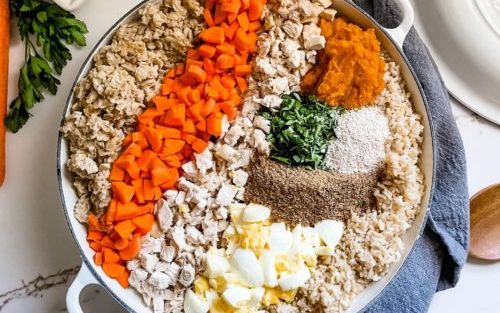
For a 3-day supply: 2 lbs (900g) boneless, skinless chicken breast, 1½ cups (280g) uncooked white rice (or brown rice for more fiber), 1 cup (130g) chopped carrots, 1 cup (150g) frozen or fresh peas, 1 tablespoon fish oil or canine omega-3 supplement, and a veterinarian-recommended canine multivitamin or calcium supplement as directed on the product label.
Cooking Method
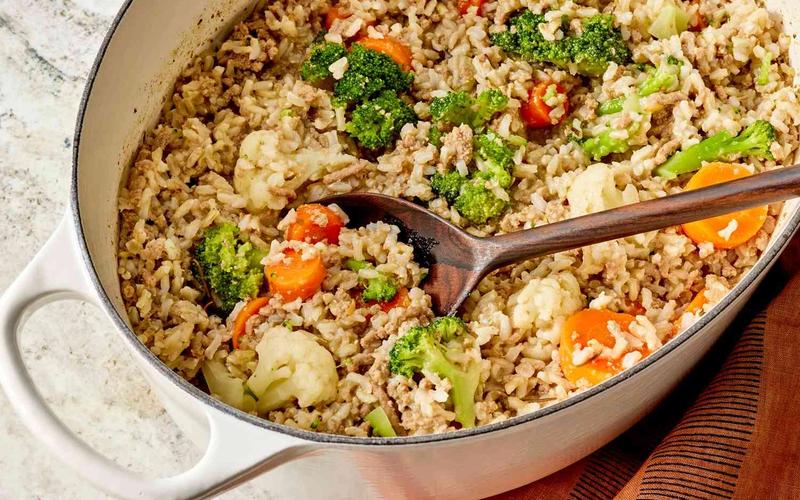
Boil the chicken in plain water — no salt, no broth, no seasoning of any kind — until fully cooked through, approximately 15–20 minutes depending on thickness. Remove and shred into small, bite-sized pieces, discarding all fat and any bone fragments. Cook the rice in separate plain water according to package directions, then steam or boil the carrots and peas in plain water until soft. Combine the chicken, rice, and vegetables in a large bowl, allow to cool completely, and stir in the fish oil. This easy homemade dog food recipe produces a home cooked dog food that's far more digestible for most dogs than heavily processed commercial alternatives, and it can be portioned and stored immediately after cooling.
Portion Size by Dog Weight
A general starting guideline: approximately 2–3% of the dog's body weight in food per day, split across two meals. A 25 lb (11 kg) dog needs roughly ½–¾ cup per meal. These are starting estimates — exact portions depend on age, activity level, and metabolic rate, and should be confirmed with a veterinarian, particularly for puppies, senior dogs, or dogs managing a health condition.
Healthy Homemade Dog Food Recipe — Adding Vegetables for Balance
Expanding the base recipe to include homemade dog food with vegetables beyond carrots and peas introduces more micronutrient variety. Sweet potato (cooked, no skin for sensitive dogs) adds complex carbohydrates and potassium. Broccoli florets, steamed and chopped small, add vitamin C and fiber — limit to about 10% of the total meal volume to avoid digestive upset. Zucchini, cooked until soft, is a low-calorie addition that works well for dogs on a weight management plan. For homemade dog food recipe for picky eaters, rotating the vegetable combination every week — carrots one week, sweet potato the next — maintains novelty and prevents the meal refusal that some dogs develop toward a completely unchanging diet.
Homemade Dog Food Recipe for Beginners — What Supplements to Add
The homemade dog food recipe for beginners challenge is supplementation — not because it's complicated, but because it's easy to skip and the consequences of skipping it aren't immediately visible. Calcium is the most critical gap: home-cooked diets almost universally under-supply calcium relative to phosphorus, which leads to skeletal problems over time. Finely ground eggshell powder (about ¼ teaspoon per pound of food) provides a food-based calcium source; alternatively, a canine calcium supplement dosed per the veterinarian's recommendation works. Omega-3 fatty acids from fish oil support skin, coat, and joint health — 1 tablespoon per 25 lbs of body weight per day is a commonly cited starting dose, but the specific product label and veterinary guidance should both be followed. A complete canine multivitamin covers zinc, B vitamins, and vitamin D that home-cooked food typically provides insufficiently. The AAFCO nutritional profiles for dogs provide the detailed minimum and maximum nutrient levels that any complete dog diet should meet — these are the benchmarks worth sharing with a veterinarian when reviewing a homemade feeding plan.
Homemade Dog Food Recipe for Adult Dogs — Protein Options Beyond Chicken
The homemade dog food recipe for adult dogs can incorporate a range of lean protein for dogs beyond chicken once the base method is established. Ground turkey (cooked, no seasoning, drained of fat) is a close substitute for chicken in the same recipe. Lean beef — extra-lean ground beef or trimmed stew cuts — cooked thoroughly and drained, adds more iron than chicken and suits active, high-energy dogs. Cooked boneless salmon provides omega-3 fatty acids directly from the protein source rather than requiring a supplement, though raw salmon carries a parasite risk in some regions and should always be fully cooked. Whole eggs, fully cooked (hard-boiled or scrambled in a dry pan), work well as a secondary protein source added 2–3 times per week rather than as the primary daily protein. Homemade meals for dogs built on protein rotation provide more micronutrient variety than a single-protein diet maintained over months or years.
Protein Sources for Homemade Dog Food at a Glance
This table provides a quick reference for matching protein to the dog's needs, activity level, and what's available when preparing a healthy dog food batch.
| Protein | Preparation | Fat Level | Notes |
|---|---|---|---|
| Chicken breast | Boiled, no skin | Low | Most commonly recommended, easily digestible |
| Ground turkey | Cooked, no seasoning | Low–medium | Good alternative to chicken |
| Lean beef | Cooked, drained | Medium | Higher iron, suits active dogs |
| Salmon | Cooked, boneless | Medium (healthy fats) | Omega-3 rich, always cook fully |
| Eggs | Fully cooked | Medium | Good secondary protein, not primary |
How to Make Homemade Dog Food at Home — Batch Cooking and Storage
The practical answer to how to make homemade dog food at home sustainably is batch cooking: preparing a 3–5 day supply at once, portioning into daily servings, and refrigerating or freezing. Cooked healthy dog food of this type keeps in the refrigerator for 3–4 days in airtight containers — consistent with general food safety guidance for cooked poultry and rice. For longer storage, portion individual daily servings into freezer-safe bags or containers and freeze for up to 2 months, thawing overnight in the refrigerator before serving. Never serve frozen food directly from the freezer, and always allow refrigerated food to come to room temperature before serving since cold food can cause digestive discomfort in some dogs.
Tips for a Balanced Homemade Dog Food Diet
Never add salt, onion, garlic, or any seasoning to any component of the meal — dogs don't need added sodium and many common flavor enhancers are toxic. Transition from commercial food to homemade gradually: start with 25% homemade and 75% commercial for the first week, then 50/50 for the second week, then 75/25, then fully homemade by week four. This gradual transition prevents the digestive upset (loose stool, vomiting) that commonly follows a sudden diet change. Rotate protein sources every 2–4 weeks for nutritional variety. Consult a veterinary nutritionist — not just a general practitioner — before committing to homemade food as a permanent primary diet, particularly for senior dogs, puppies under 12 months, and dogs with kidney, liver, or metabolic conditions.
FAQ
Is homemade dog food healthier than commercial dog food?
Homemade dog food can be healthier for dogs with specific allergies or sensitivities, since the owner controls every ingredient. However, most home-cooked recipes are nutritionally incomplete without added supplements — commercial foods meeting AAFCO standards are formulated to be complete and balanced, which most homemade recipes aren't without veterinary guidance.
What is the best base for homemade dog food?
Boiled chicken breast with cooked white rice and dog-safe vegetables like carrots and peas is the most widely recommended starting base, as it's highly digestible, low in fat, and accepted by most dogs. This combination is also the standard bland diet prescribed by veterinarians for dogs recovering from digestive issues.
What vegetables can dogs eat in homemade food?
Dog-safe vegetables include carrots, peas, green beans, sweet potato, broccoli (in moderation), zucchini, and small amounts of spinach. Onions, garlic, leeks, and chives are all toxic to dogs regardless of how they're prepared and should never be included in any homemade dog food recipe.
How much homemade food should a dog eat per day?
A general guideline is approximately 2–3% of the dog's body weight in food per day, split across two meals — a 25 lb (11 kg) dog needs roughly ½–¾ cup of food per meal. Exact quantities depend on the dog's age, activity level, and health status, and should be confirmed with a veterinarian.
Can homemade dog food replace commercial food permanently?
Homemade dog food can be a dog's primary diet if properly balanced with veterinary guidance, including supplementation for calcium, vitamins, and omega fatty acids that home-cooked food typically lacks. Without supplementation and regular veterinary oversight, a home-cooked diet risks nutritional deficiencies over time.
This homemade dog food recipe is a practical, safe starting point — not a complete long-term nutritional solution without veterinary review. Start with the chicken and rice base, add dog-safe vegetables for fiber and micronutrients, supplement deliberately for calcium and omega-3s, and consult a veterinarian before making it the primary diet permanently. Getting the foundation right protects the dog's health over months and years, which is precisely why the extra step of professional review is worth taking before the first batch becomes a permanent routine.
Tags