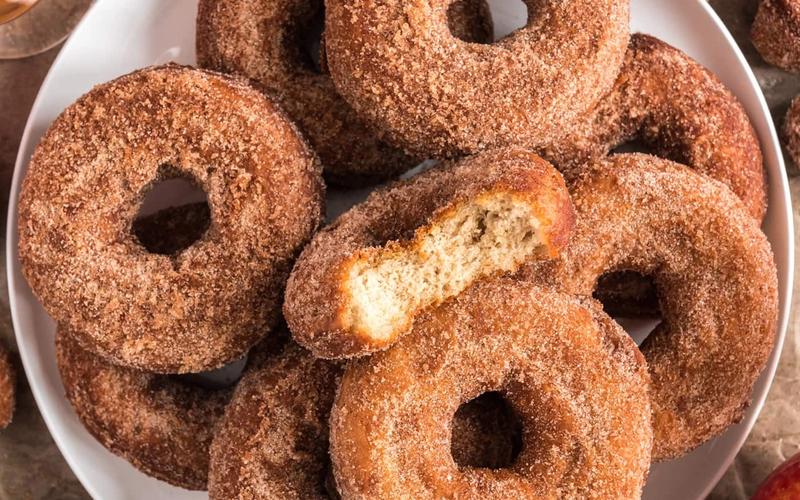
Apple Cider Donut Recipe: Easy Baked Donuts

Enjoy soft, flavorful baked apple cider donuts made with apple cider and warm fall spices. This easy homemade recipe delivers delicious donuts without deep frying.
Prep time
15 minutes
Cook time
12 minutes (baking) plus 20 minutes (cider reduction)
Cuisine
American (New England / Fall Seasonal)
Ingredients
Nutrition
Apple cider donuts are one of those seasonal foods that tastes like the place they come from: a fall orchard stand, a farmers market in October, or a cider mill on a cold Saturday morning. What makes them taste specifically of apple cider rather than generic spiced cake is the reduced fresh apple cider in the batter, which concentrates the apple's tart, fermented sweetness into a syrupy liquid that no apple extract or applesauce can replicate. This guide covers the baked version, which is the most accessible for home kitchens, built around that reduction as the central technique step, alongside the full method, the cinnamon sugar coating, and the honest comparison between baked and fried results.
Why Apple Cider Reduction Is the Whole Recipe
The single technique step that separates an authentic apple cider donut recipe from a generic spiced cake donut is the cider reduction. Simmering one cup of fresh apple cider down to a quarter cup removes the majority of its water content and concentrates the apple's natural sugars, malic acid, and lightly fermented flavor compounds into a thick, amber, intensely apple-flavored liquid. These concentrated compounds survive the heat of baking in a way that unconcentrated cider does not, since the water that would otherwise carry some of those volatile aromatic molecules away as steam has already been removed. This is the foundation of every good apple cider donut recipe, and it's where the fall baking investment of 15 minutes pays back disproportionately in the finished flavor.
Ingredients for Homemade Apple Cider Donuts
A batch of 12 homemade apple cider donuts uses the following ingredients: 1 cup (240ml) fresh apple cider (reduced to ¼ cup), 2 cups (250g) all-purpose flour, 1½ teaspoons baking powder, ½ teaspoon baking soda, 1½ teaspoons ground cinnamon, ½ teaspoon ground nutmeg, ¼ teaspoon allspice, ¼ teaspoon ground cloves, ¾ cup (150g) brown sugar, 2 large eggs, ¼ cup (55g) melted unsalted butter, and ½ cup (120ml) buttermilk. Brown sugar produces a deeper, more caramel-adjacent sweetness than white sugar and pairs more naturally with the fermented apple flavor of the cider reduction. Buttermilk's natural acidity activates the baking soda while also tenderizing the crumb, since the acid weakens gluten bonds in a way that plain milk does not.
Making the Apple Cider Reduction
Pour 1 cup (240ml) of fresh apple cider into a small saucepan and bring to a medium simmer. Cook uncovered, stirring occasionally, for 15 to 20 minutes until the liquid has reduced to approximately ¼ cup (60ml). The finished reduction should look like a thin amber syrup and coat the back of a spoon lightly. Use fresh, unfiltered apple cider rather than apple juice for this step. According to USDA FoodData Central, apple cider contains more naturally occurring acids and flavor compounds than filtered apple juice, which has been processed in ways that remove the cloudiness and with it some of the fermented complexity that makes cider reduction work. Allow the reduction to cool completely before adding it to the batter, since warm reduction melts the butter prematurely and disrupts the batter's emulsion.
Choosing and Mixing the Spices
A premade apple pie spice blend works as a shortcut (use 2 teaspoons in place of the individual spices above). The individual spice approach produces a more precisely balanced result because the ratios can be adjusted to preference: more cinnamon for a warmer base note, a heavier hand with nutmeg for something that reads more distinctly autumnal, or extra cloves for a slightly more assertive spice. Cinnamon alone produces a flat, one-dimensional result compared to a blended mix, since it lacks the floral quality of clove and the sharp warmth of nutmeg that together produce the depth associated with fall desserts and autumn recipes.
Easy Baked Apple Cider Donuts: The Full Method
This is the complete easy baked apple cider donut recipe, written in the order it needs to happen.
The Donut Pan and Why It Matters
A standard 6-cavity metal donut pan produces the classic ring shape and a slightly crisper outer edge than a silicone pan, since metal conducts heat more efficiently and promotes surface browning. Silicone pans produce more even, consistent baking but less exterior color. Grease the pan generously with melted butter or cooking spray before each batch, including between batches, since the sugar content in this batter causes sticking even on non-stick surfaces.
Filling the Pan Without Overfilling
Transfer the batter to a large zip-lock bag and snip a small corner off, creating a piping bag. Pipe the batter into the cavities in a continuous circle, filling each cavity to about two-thirds full. This produces more uniform donuts than spooning, since a spoon introduces air gaps and uneven distribution that cause irregular shapes and uneven baking. The ring hole must remain open after filling; if batter covers the center post of the cavity, the donut won't form a clean ring and will instead look like a small round cake.
Baking Temperature and Time
Bake at 350°F (175°C) for 10 to 12 minutes. The donuts are ready when a toothpick inserted into the thickest part of the ring comes out clean and the tops spring back lightly when pressed. Overbaking by even 2 minutes produces a noticeably drier crumb since the small size means very little internal moisture buffer. Allow the donuts to cool in the pan for 5 minutes before turning out, then proceed immediately to coating while still warm.
Apple Cider Donuts with Cinnamon Sugar: The Coating
The cinnamon sugar coating is applied while the donuts are still warm, which is the only window when the butter adheres cleanly and the sugar sticks with enough coverage to produce the grainy, spiced exterior that defines apple cider donuts with cinnamon sugar. Combine ½ cup (100g) of granulated sugar with 1 tablespoon of ground cinnamon in a wide, shallow bowl and stir to combine. Melt 3 tablespoons of unsalted butter in a separate shallow bowl. Brush each warm donut with the melted butter on all surfaces, then immediately roll in the cinnamon sugar mixture, pressing lightly to adhere. Work one donut at a time rather than coating several at once, since the butter surface cools within 60 to 90 seconds and loses its ability to hold the sugar coating evenly.
Apple Cider Donuts Without Frying: Baked vs. Fried Comparison
Apple cider donuts without frying are cake donuts by nature, which is an accurate description of what a baked donut is: a small, ring-shaped cake rather than a yeasted, fried ring. The difference between baked and fried is real and worth naming. Fried apple cider donuts have a thinner, crisper exterior, a more open and airy crumb from the oil-cooking process, and a slightly denser apple flavor concentration because the exterior seals faster in hot oil than in a dry oven. Baked donuts are more tender, moister, and more uniform in crumb but lack the exterior crispness that makes a fried donut satisfying in a textural way that baking can't fully replicate.
For a fully fried version: roll the chilled batter into rounds using a donut cutter or two round cutters of different sizes, and fry in 2 inches (5cm) of neutral oil heated to 350°F (175°C) for 1 to 2 minutes per side until golden. Drain on paper towels and coat in cinnamon sugar immediately. This easy apple cider donut recipe fried version requires a thermometer and oil management that the baked version avoids, which is why most home cooks default to the baked method with no meaningful compromise on flavor.
Apple Cider Donuts from Scratch vs. Mix-Based Shortcuts
The apple cider donuts from scratch version in this guide produces a more intensely apple-flavored, more tender donut than any mix-based shortcut, because the fat, sugar, and spice ratios are calibrated specifically for this recipe. That said, a boxed spice cake mix with cider reduction substituted for the liquid called for in the package directions produces a reasonable result in considerably less time. A boxed donut mix with cider reduction added in place of the standard liquid is another valid shortcut. Both produce a donut-shaped spiced cake that is noticeably better than the mix alone, since the cider reduction improves any base it's added to.
Apple Cider Donut Coating and Finishing Options at a Glance
The coating is the most visible customization decision and changes the finished donut's sweetness level and visual appearance significantly.
| Coating Option | Key Ingredients | Sweetness Level | Best For |
|---|---|---|---|
| Cinnamon sugar (classic) | Butter, cinnamon, granulated sugar | Medium-sweet | Traditional orchard style |
| Powdered sugar | Powdered sugar only | Light, delicate | Lighter finish, easier coating |
| Brown sugar cinnamon | Brown sugar, cinnamon, butter | Rich, caramel-adjacent | Deeper fall flavor |
| Maple glaze | Maple syrup, powdered sugar | Sweet, maple-forward | More dessert-like presentation |
| Plain (no coating) | None | Low (donut only) | Clean base for coffee pairing |
Tips for the Best Homemade Baked Apple Cider Donuts
Let the cider reduction cool completely before adding it to the batter. Warm reduction at the temperature it comes off the stove will partially melt the butter in the batter, disrupting the emulsion and producing a denser, less tender crumb. Don't overmix after combining wet and dry ingredients: stir just until no streaks of flour remain, since overmixing develops gluten and turns a tender donut batter into something approaching bread dough in texture. Coat the donuts while still warm from the oven, working one at a time. Greasing the pan before every single batch prevents the sugar content from causing sticking even on surfaces that seemed adequately greased from the previous batch. These principles apply equally to the homemade baked apple cider donuts format and to the fried version, since the batter and the coating logic are identical between the two.
Storage, Freshness, and Reheating
Baked apple cider donuts are at their best on the day they are baked. The cinnamon sugar coating softens overnight as it absorbs moisture from the donut, and the crumb dries noticeably by the third day. Store in an airtight container at room temperature rather than in the refrigerator, which accelerates staling through the process of starch retrogradation at cold temperatures. A day-old donut benefits from 10 seconds in the microwave followed by a quick re-roll in fresh cinnamon sugar, which restores both warmth and exterior texture. For another autumn baking project that uses the season's fresh apples in a different format, the applesauce recipe is worth making from the same orchard-fresh apple haul.
FAQ
What makes apple cider donuts taste like apple cider?
The flavor comes from reduced apple cider added to the batter. Simmering fresh apple cider down to a quarter of its original volume concentrates the apple's natural sugars and fermented flavor compounds into a syrupy liquid that survives the heat of baking. Apple juice or apple extract produce a noticeably flatter, less authentic result.
Do you need a donut pan for baked apple cider donuts?
Yes, a donut pan is needed to achieve the ring shape. Without one, the same batter works well as donut holes baked in a mini muffin tin (12 to 14 minutes at the same temperature), or as a loaf or round cake, though the cinnamon sugar coating does not distribute as evenly on a flat-surfaced baked good.
Can apple cider donuts be made without frying?
Yes. Baked apple cider donuts use the same spiced batter cooked in a donut pan rather than fried in oil. The texture is denser and more cake-like than a fried version, but the apple cider and spice flavor is equally present. Most home recipes default to the baked version for practicality.
How long do homemade apple cider donuts last?
Baked apple cider donuts are best eaten on the day they are made. Stored in an airtight container at room temperature, they remain good on the second day but begin drying out noticeably by the third. Refrigerating shortens their shelf life. They do not freeze particularly well once coated in cinnamon sugar.
What is the difference between apple cider and apple juice for donuts?
Apple cider is unfiltered, lightly pasteurized pressed apple juice with more complex, fermented flavor compounds and a cloudier appearance. Apple juice has been filtered and pasteurized, removing many of those flavor compounds. For a donut recipe built on reduced cider, fresh apple cider produces a noticeably more complex, authentic apple flavor.
Apple cider donuts made from scratch with a proper cider reduction are worth the extra 15 minutes that step adds to the process, because the reduction is the difference between a spiced cake donut and something that actually tastes like autumn. Make them on the day they will be eaten, coat them while still warm, and serve them immediately with coffee or hot cider. The apple cider donut recipe with fresh apple cider is a seasonal recipe in the truest sense: it is most rewarding when made with fresh-pressed cider from a local source at the time of year it was designed for. Browse the full vegetarian recipe collection for more autumn baking ideas alongside this one, or start with this banana bread recipe for another single-bowl fall bake that uses a similar mixing technique.
Tags