Indian Pickle Recipes That Work Without Waiting Weeks for the Sun
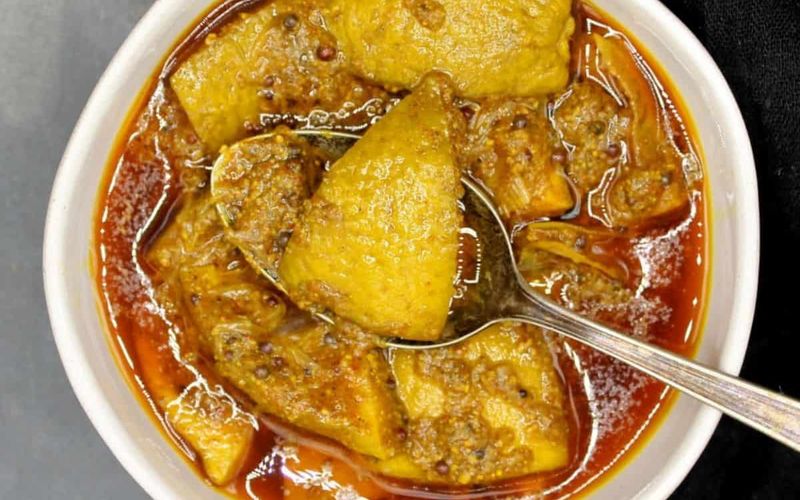
These Indian pickle recipes cover aam ka achar, nimbu ka achar, and instant versions — homemade, no preservatives, and ready without weeks of sunlight.
Indian pickle recipes sit in a frustrating middle ground for most home cooks: everyone wants a jar of proper achar, but the standard instructions assume access to weeks of reliable outdoor sunlight, specific seasonal mangoes, and a grandmother's institutional knowledge about when the oil looks right. This guide cuts through that by covering the traditional versions in full — including what the sunlight step actually does and how to replicate it indoors — alongside the lemon and instant pickle options that work year-round in any kitchen, anywhere in the world. Both the slow-cure and same-day approaches are here, organized by pickle type rather than technique, since that's almost always how the search starts.
What Makes Indian Pickle Recipes Different From Western Pickling
Western pickling — whether it's dill pickles or pickled jalapeños — relies on acid as the primary preservative, either through a boiling vinegar brine or a lactic fermentation process. Indian pickle recipes operate on a fundamentally different mechanism: salt draws moisture out of the main ingredient (mango, lemon, vegetable), and mustard oil acts as an oxygen barrier over the surface, preventing the aerobic bacteria that cause spoilage. Spices like fenugreek and mustard seed contribute their own mild antimicrobial properties. The sunlight step isn't about heat — it's about drying the salted ingredient further and very gently warming the oil to help it penetrate. Understanding this makes the indoor adaptation obvious: replicate the drying with a low-temperature oven and warm the oil on the stovetop.
The Essential Pickle Masala — What Goes Into Every Indian Pickle
Across the range of homemade Indian pickle recipes, the spice base is remarkably consistent: mustard seeds, fenugreek seeds (methi), fennel seeds (saunf), dried red chili, turmeric, and asafoetida (hing). Mustard seeds and fenugreek contribute bitterness, pungency, and preservation properties. Fennel rounds the flavor with sweetness. Hing adds depth and cuts any raw sharpness. Turmeric provides color and functions as a mild antimicrobial — a property consistent with traditional food preservation practices across the subcontinent.
Why Mustard Oil Matters
Mustard oil is heated to its smoking point (around 160°C/320°F), then allowed to cool completely before mixing with the spiced ingredients. This step reduces the oil's sharpest pungency while killing any surface bacteria and changing the oil's chemistry in ways that make it more effective as a long-term preservative. Substituting with neutral oil like sunflower or vegetable oil produces a noticeably flatter, less preserved homemade achar — the shelf life shortens considerably without mustard oil's natural compounds.
The Role of Salt
Salt concentration is the single most important variable in pickle preservation. Most traditional Indian food preservation methods for oil-based pickles use 10–15% salt by weight of the main ingredient — meaning 100g of raw mango receives 10–15g of salt. Too little and the pickle risks spoiling even under oil; too much and it becomes inedible. This ratio is what gives a properly made oil pickle its 6–12 month room-temperature shelf life.
Mango Pickle Recipe at Home (Aam Ka Achar)
Aam ka achar is the most made and most searched of all Indian pickle types. A basic mango pickle recipe at home uses 500g of raw green mango (cut into chunks with the seed shard left in — this is traditional and adds flavour as the pickle matures), 50–60g rock salt (10–12% of mango weight), 2 tablespoons mustard oil per 100g of mango, and a heaped tablespoon of mixed pickle masala per 100g.
Selecting the Right Raw Mango
The mango needs to be unripe, firm enough to hold its shape after salting, and high in natural acidity — small varieties like Ramkela or Totapuri work better than large sweet mangoes, which go soft quickly in oil. Avoid any mango with yellow patches starting to develop, since even a slightly ripening mango breaks down into mush within a week in the jar.
The Indoor Alternative to Sun-Drying
After salting the mango pieces, traditional recipes sun-dry them for 1–2 days to draw out moisture. The indoor version: spread the salted mango on a baking tray and place in the oven at 50–60°C (120–140°F) for 2–3 hours with the door slightly ajar to let moisture escape. The pieces should feel dry on the surface but not desiccated. Once dry, combine with the heated-and-cooled mustard oil and pickle masala, pack into a completely dry sterilized jar, press down to submerge under oil, seal, and leave in a cool dark place for 2–4 weeks before eating.
For a quicker, non-preserved alternative that serves the same sweet-sour table role, this mango chutney recipe is ready the same day and requires no curing time.
Lemon Pickle Recipe Indian Style (Nimbu Ka Achar)
The lemon pickle recipe Indian tradition produces two genuinely different things: an oil-and-spice lemon pickle that works like aam ka achar, and a salt-only nimbu ka achar that requires nothing but lemons, rock salt, time, and a clean jar.
Oil-Based Lemon Pickle
Quarter 500g of unwaxed lemons (key lime-sized lemons work best; large lemons can be halved), toss with 50g rock salt, and let them sit in a bowl for 24 hours to release juice. Drain the juice, warm 100ml of mustard oil to smoking point and cool, then mix the drained lemons with the cooled oil, 1 teaspoon each of fenugreek powder, red chili powder, and turmeric. Pack into a dry jar, seal, and leave for a minimum of 2–3 weeks. The lemon softens gradually as the oil and salt cure the peel.
Salt-Brined Lemon Pickle
This is the simplest of all Indian pickle recipes: quarter 500g of lemons, pack into a sterilized jar with 60–70g of rock salt (and optional 2 tablespoons of sugar if a slightly sweeter version is preferred), seal tightly, and leave at room temperature. Turn the jar upside down and back upright once a day for the first week to distribute the brine. Edible after 4 weeks, excellent at 8, and keeps for 6 months or more without refrigeration once the salt and lemon juice have fully cured the peel. No oil, no cooking, nothing else needed.
Instant Pickle Recipes — Same-Day Indian Achar
Instant pickle recipes serve a different function from preserved pickles — they're closer to a sharp, spiced relish that can be assembled for a single meal rather than a condiment stored for months. The search term Indian pickle recipes without sunlight describes exactly what these are: no curing, no oil preservation, just marination.
Cucumber or Carrot Instant Pickle
Slice 200g of cucumber or carrot very thin (about 2mm), toss with ½ teaspoon mustard seeds, ¼ teaspoon turmeric, 1 green chili (sliced), the juice of half a lemon, and ½ teaspoon salt. Mix and leave at room temperature for 2–4 hours, then refrigerate. Ready to serve and keeps for 3–4 days refrigerated. Pair a fresh instant pickle alongside paneer tikka masala for a sharp, acidic contrast that cuts through the rich masala sauce.
Raw Mango Instant Pickle
Finely grate or julienne 200g of raw green mango, toss immediately with ½ teaspoon red chili powder, ¼ teaspoon mustard seeds, 1 teaspoon of heated-and-cooled mustard oil, and salt to taste. Done in 30 minutes — no waiting, no curing. The mango's natural acidity does the work that salt and time would do in a preserved version.
Indian Pickle Preservation Methods at a Glance
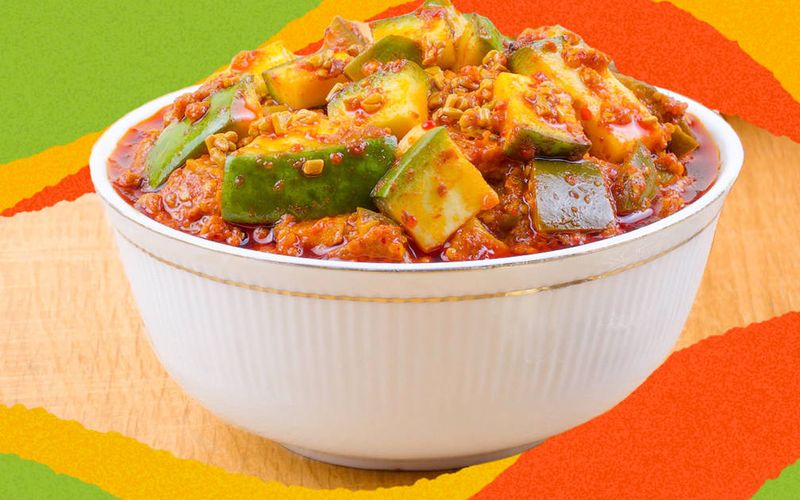
The preservation method chosen for any Indian pickle recipe determines everything downstream — shelf life, equipment needed, and the minimum wait before the jar is ready to eat.
| Method | Main Preservative | Ready In | Shelf Life | Equipment Needed |
|---|---|---|---|---|
| Oil-based (traditional) | Mustard oil + salt | 2–4 weeks | 6–12 months | Clean jar, sunlight or warm oven |
| Salt-brined | Salt only | 4 weeks | 6 months+ | Clean sealed jar |
| Instant/same-day | Lemon juice + salt | 2–4 hours | 3–4 days refrigerated | Bowl, jar |
| Vinegar-based (modern) | Vinegar + salt | 24–48 hours | 4–6 weeks refrigerated | Sealed jar, refrigerator |
Traditional Indian Pickle Recipes — Regional Variations Worth Knowing
The traditional Indian pickle recipes that exist beyond mango and lemon reflect how dramatically preservation traditions vary by climate, available ingredients, and cooking culture. Punjabi-style mixed achar leans heavily on fenugreek and mustard with a mix of carrot, turnip, and green chili. South Indian avakaya is a mango pickle that uses sesame oil rather than mustard, with a heavier chili content and a sharper, less bittersweet finish than the North Indian version. Gujarati karela ka achar (bitter gourd pickle) uses the vegetable's inherent bitterness as part of the flavor profile rather than trying to reduce it. Northeastern India produces fermented bamboo shoot and dried fish pickles that use neither oil nor vinegar — fermentation alone handles preservation, in a tradition much closer to Korean kimchi or Japanese tsukemono than to anything found in a North Indian kitchen.
Easy Indian Pickle Recipes — Tips for Storing Homemade Pickle Safely
The most common reason easy Indian pickle recipes go wrong isn't the spice balance — it's moisture. Mold in homemade achar almost always traces to a wet jar, wet utensil, or water remaining on the main ingredient at assembly. The USDA Complete Guide to Home Canning covers the food science of home preservation — while Indian oil-based pickles don't go through a water-bath process, the core principle of moisture control and clean equipment is identical across preservation traditions.
How to store homemade pickle correctly: sterilize jars in a 110°C (230°F) oven for 15 minutes and allow to cool completely before filling. Use only dry utensils — a wet spoon introduced into an oil-based pickle starts mold within days. Always press the pickle down so oil covers the surface fully; exposed pickle above the oil line will mold regardless of how well the rest of the jar was prepared. Store oil-based pickles at room temperature in a cool, dark cupboard, not in the refrigerator — cold temperatures cause the oil to solidify and can alter the curing environment. Browse the full vegetarian recipe collection for more traditional Indian condiments and sides that pair well alongside these pickles at the table.
FAQ
How long does homemade Indian pickle last?
Oil-based Indian pickles made with proper salt ratios and kept in sterilized, dry jars last 6–12 months at room temperature in a cool, dark place. Salt-brined pickles like lemon pickle can last 6 months or longer. Instant pickles made without oil last only 3–4 days refrigerated.
Can Indian pickle be made without sunlight?
Yes — most traditional pickle recipes requiring sun exposure use it to evaporate surface moisture and slightly warm the oil. Both can be replicated indoors: dry the salted vegetables in a low-temperature oven (50–60°C/120–140°F) for 2–3 hours, and warm the oil in a pan rather than under the sun.
Why does homemade pickle get moldy?
Mold in homemade Indian pickle almost always traces back to moisture — either in the jar, the utensils used to handle the pickle, or water retained on the main ingredient before assembling. Ensuring the jar, spoon, and vegetables are completely dry before assembly and keeping the oil covering the pickle surface prevents most mold issues.
What oil is used in Indian pickle?
Mustard oil is the traditional choice in North Indian pickle recipes because its pungency and natural compounds contribute to preservation. It's typically heated to smoking point first, then cooled before mixing. South Indian pickles often use sesame oil instead, which has its own preservative properties and a distinct flavor.
Which pickle is healthiest — mango or lemon?
Both provide probiotic activity if naturally fermented, and both are high in sodium, which limits how much should be eaten daily. Lemon pickle made with brine rather than oil is lower in fat. Mango pickle provides some vitamin A from the raw mango. Neither is a significant nutritional food — both are condiments.
The most reliable starting point for these Indian pickle recipes is whichever of the two classics matches what's already in the kitchen — raw mango in season, or lemons available year-round. The salt-brined lemon pickle in particular is as simple as any preserved food gets: lemons, rock salt, a clean jar, and four weeks. Make a small first batch (500g of the main ingredient), check it at two weeks to calibrate the salt level and texture, and scale up from there. For more ways to use pickles and condiments alongside Indian breakfasts, the high protein Indian breakfast guide covers dal-based mornings where a sharp achar on the side is genuinely useful.
Tags